

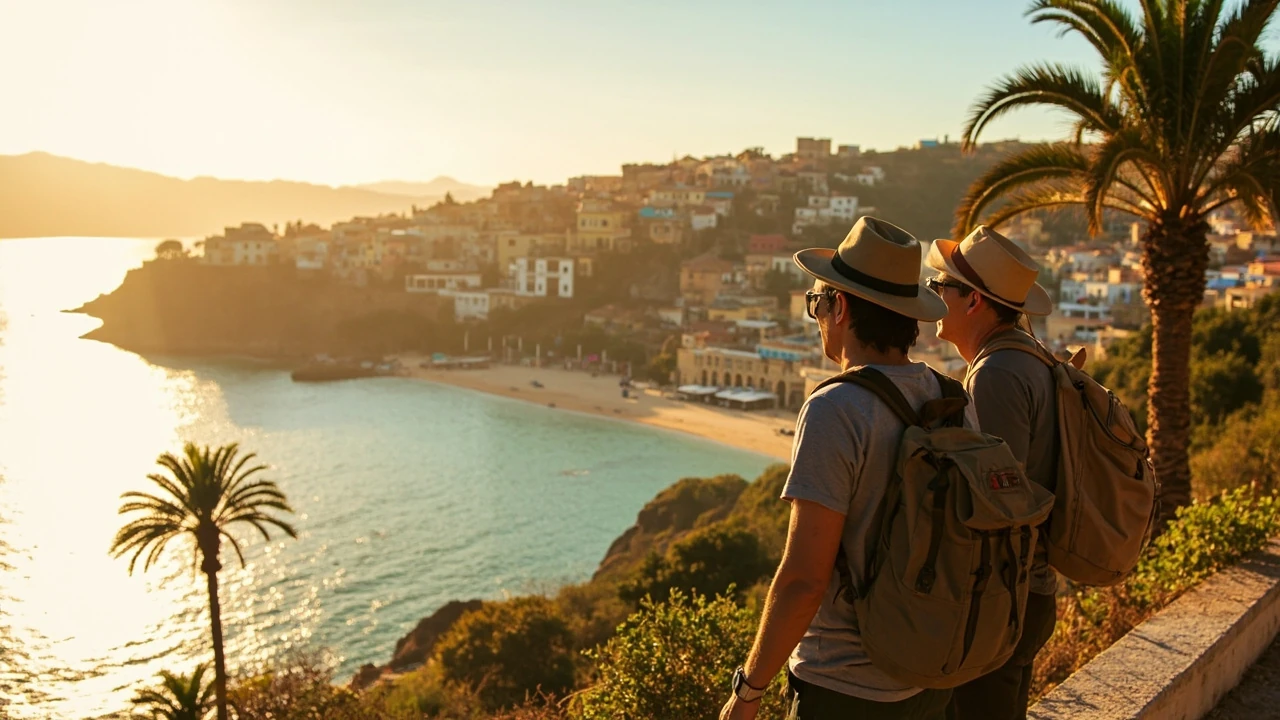
Bahia is the practical shorthand for travelers comparing Salvador, the coast, and the interior
A trip to Bahia can mean a weekend in Salvador, a week along the Atlantic coast, or an ambitious journey through the Chapada Diamantina and the drier interior. Those choices lead to very different landscapes, budgets, transportation needs, and rhythms of travel. The state is not simply a single beach destination: it is a large part of northeastern Brazil with a long coastline, historic towns, agricultural regions, mountain plateaus, and a capital built around the Bay of All Saints.
For travelers coming from the United States, the most useful way to plan Bahia is to decide which kind of landscape and pace you want before choosing a base. Salvador rewards travelers who enjoy urban food, music, architecture, and short excursions. The southern coast favors beaches, small towns, and a road-trip rhythm. The interior offers plateaus, waterfalls, wide views, and more demanding overland travel. This guide explains how to compare those options, how the climate changes across the state, and what to confirm before booking.
Bahia is one of Brazil’s 26 states and occupies much of the Northeast Region. Its capital, Salvador, sits on a peninsula beside the Bay of All Saints and the Atlantic Ocean. The bay is the state’s defining geographic feature, while the long coastline extends in both directions from the capital. Farther inland, the Chapada Diamantina separates wetter eastern areas from the more arid sertão. The state overview on the Bahia state profile explains more about its geography, history, and regional divisions.
What kind of Bahia trip fits your travel style?
The strongest Bahia itinerary starts with priorities rather than a list of towns. Some visitors want to spend several days in one place, while others are comfortable moving between coastal and inland destinations. A clear purpose prevents the trip from becoming a collection of long drives and short photo stops.
| Travel priority | Best base or route | What to expect | Planning consideration |
|---|---|---|---|
| Food, history, and city atmosphere | Salvador and its historic center | Urban streets, markets, regional cooking, music, museums, and bay views | Use a central base for easy walking and short daily outings |
| Beaches and relaxed coastal stops | Porto Seguro, Praia do Forte, or the southern coast | Atlantic beaches, small coastal towns, and a slower vacation pace | Distinguish the town center from beach accommodation areas |
| Landscapes and outdoor travel | Chapada Diamantina | Mountainous plateaus, valleys, waterfalls, and cooler conditions | Allow more travel time and verify road conditions locally |
| History and small towns | Cachoeira and the Recôncavo region | Colonial-era settlements, local food, and slower-paced inland travel | Base in one town instead of trying to cover the whole region |
Salvador is the easiest starting point for a first visit because it offers the largest concentration of well-known sights and serves as a gateway to the Bay of All Saints. It is also the state’s capital and most populous city, which means more transport connections, a wider range of accommodations, and more potential weather disruption than a quiet coastal town.
The Recôncavo, the maritime region around the bay, has a different appeal. Its landscape and history are tied to sugar and tobacco cultivation, and older towns such as Cachoeira preserve a strong sense of local heritage. This is often more rewarding for travelers interested in architecture, food, and cultural history than for people who want to maximize beach time.
The southern coast is an easier fit for a classic beach trip. It is also where a road trip can feel coherent: a traveler can move along the coast, stop for a swim or lunch, and keep overnight travel relatively simple. The tradeoffs are distance from Salvador and the possibility that a seemingly short map distance will take much longer on the ground.
The Chapada Diamantina is the most physically demanding option. Its highlands, valleys, and seasonal water features require more flexible transportation and careful pacing. It can be excellent for travelers who want landscapes and hiking rather than a tightly scheduled city break.
Salvador is where urban energy meets the bay
Salvador is often associated with music, food, and a dramatic setting between the city and water. Its historic center includes steep streets, colorful buildings, churches, squares, and viewpoints that reveal the bay. The upper city and lower city are distinct not only geographically but also in atmosphere, and a first visit benefits from time in both.
Start with a walking route through the upper historic area rather than treating the city as a collection of isolated attractions. The value comes from moving between streets and seeing how the buildings, street corners, churches, and public spaces relate to one another. Salvador’s old center also rewards travelers who slow down, especially when weather is warm and the midday sun is strong.
Food is one of the main reasons to plan meals rather than leave them to chance. Bahian cooking is built around strong seasoning, seafood, beans, cassava, meats, and distinctive blends of spices. Dishes that travel well beyond Brazil include moqueca, acarajé, vatapá, and various forms of beef prepared with peppers and spices. Because ingredients and naming can vary by restaurant and region, a traveler who has a dietary restriction or allergy should communicate clearly rather than assume that a dish name tells the whole story.
For a short visit, it is reasonable to divide Salvador into three parts:
- A first day focused on the upper historic center and its bay-facing viewpoints.
- A second day for a lower-city neighborhood walk, local meals, and time along the waterfront.
- A third day for a nearby bay excursion or a slower neighborhood visit rather than another checklist of major landmarks.
Music is another defining part of Salvador’s identity, but the calendar changes throughout the year. Rather than building a trip around an assumed event or performance, check current schedules close to travel dates and treat live music as a welcome possibility instead of a guaranteed plan. The same rule applies to festivals and religious observances: local events can add energy to a visit, but the timing and access arrangements should always be verified.
The city also rewards travelers who use it as a base for a day trip. A route across the bay can offer a different view of Salvador and a change of scenery without requiring a long overland journey. Ferry, boat, and road options serve different needs, so confirm the current schedule, meeting point, baggage rules, and weather conditions with the local operator before leaving.
The coast works best when you choose a pace
Bahia has such a long coastline that “beach destination” is too broad a label. The beaches south of Salvador, around Porto Seguro and Praia do Forte, offer a different travel rhythm from the beaches north toward the bay and São Francisco region. Even within one area, the physical beach, the accommodations, and the town center may be separated by a walk, a short taxi ride, or a drive.
When comparing coastal lodging, look beyond the headline price and ask what is included. Some properties sit directly on the sand, while others are in a neighborhood a short distance from the water. Consider the walk to restaurants, the availability of ATMs and pharmacies, the amount of traffic, and how the property handles beach access. A room that seems far from the center in a walkable town can be inconvenient when bags, children, or hot weather are involved.
| Coastal option | Best for | Strength | Tradeoff |
|---|---|---|---|
| Salvador | First-time visitors and shorter itineraries | Urban sights, food, music, transport connections, and bay access | It is a city rather than a quiet beach compound |
| Porto Seguro | Travelers wanting a conventional coastal vacation | Clear resort structure and easy access to southern coastal stops | The central beach can feel busy and commercial |
| Praia do Forte | Visitors combining beach time with a smaller town | A more compact base with a strong coastal setting | Fewer large-city conveniences than Salvador |
| Northern coast and São Francisco region | Road trips focused on landscape and longer drives | Access to a different coastline and river environment | Distances are substantial and transport choices vary |
A coastal road trip works best with no more than a few stops than you can enjoy. Every additional transfer adds luggage handling, driving time, and another check-in. A common mistake is to plan an itinerary around the number of locations on a map rather than the hours available after the drive.
For example, a traveler with five nights might use two nights in Salvador, one night near a southern coastal town, and two nights farther along the route. The final night can serve as a buffer before returning to Salvador or reaching the departure point. A buffer reduces the cost of a delayed bus, a weather-related road issue, or a town that deserves more time than planned.
Beach conditions also vary with season and location. The bay can have different water and weather conditions from the open Atlantic coast, and exposed beaches can feel different from sheltered ones. Rather than assuming that every day will be ideal for swimming, build the itinerary around a balance of beach hours, town exploration, and flexible activities.
For travelers comparing coastal planning methods, the practical approach used for the Amalfi Coast itinerary considerations is useful: choose the base carefully, accept that road time is part of the experience, and avoid trying to turn every viewpoint into a rushed stop.
Chapada Diamantina calls for flexible travel days
Chapada Diamantina is a mountainous tableland that divides Bahia into distinct geographic zones. Its elevated landscapes, plateaus, valleys, and waterfalls look very different from the coast. This is the part of Bahia that most rewards travelers who value scenery and are prepared to accept slower transfers.
The region’s weather and access can change the order of a visit. Trails, viewpoints, and accommodation locations should be planned with local operators or hosts rather than from a single map. Some routes may involve unpaved roads, steep grades, or roads affected by rain. A route that looks simple on a digital map can take several hours once detours, road conditions, and stops are included.
Choose a base according to the landscape you want to see, then make day trips rather than moving every evening. A stay of three nights gives more value than two separate one-night stops because it reduces backtracking. It also leaves room to adjust a day when weather or trail conditions are not right.
- Ask whether a waterfall or spring has a seasonal access condition before treating it as a fixed itinerary stop.
- Confirm whether a driver can wait, whether parking is practical, and how long the return journey will take.
- Carry more water and basic supplies than a day in a large city seems to require.
- Keep one flexible period for a viewpoint, short walk, or longer excursion that needs extra time.
Elevation also means the climate is not identical to the tropical coast. Visitors may need a light layer for cool mornings or evenings, especially on exposed plateaus. Shoes suitable for uneven ground make a larger difference than many travelers expect.
Do not compress the highlands into a rushed excursion from Salvador. The distance makes that approach tiring and reduces the chance of seeing the landscape properly. If time is limited, choose Salvador and the coast instead. If the interior is the priority, remove a coastal stop and allow the highlands the space they need.
The interior explains Bahia beyond the postcard
Bahia’s interior is often compressed into a reference to the sertão, but that shorthand hides major differences in terrain, water access, and settlement. The São Francisco River crosses western Bahia and remains vital to the arid interior. The state also contains agricultural areas, historic cattle-country towns, and landscapes that change sharply over relatively short distances.
This region is not the easiest part of Bahia for a casual traveler. Distances are long, public transportation can be less convenient than in the major tourist centers, and local weather can affect road travel. Still, it provides a more grounded view of the state when combined with the coast and Salvador.
Historic towns such as Cachoeira offer a more accessible taste of the Recôncavo and its interior history. Feira de Santana has its own distinct identity as a major regional commercial city, while places farther west require a more self-directed, road-based approach. Travelers should avoid treating a handful of famous destinations as the complete map.
One practical approach is to identify a single inland theme for the trip:
- Choose architecture and colonial history, then concentrate on the Recôncavo and its older settlements.
- Choose river and semi-arid landscapes, then build the route around a small number of well-connected western destinations.
- Choose regional food and markets, then use Salvador, Feira de Santana, and nearby smaller towns as bases.
- Choose outdoor landscapes, then prioritize Chapada Diamantina rather than trying to add distant western stops.
Food offers another way into Bahia’s interior. Regional cooking varies by locality, and a good market can show the ingredients behind the dishes more clearly than a generic restaurant list. Ask what is seasonal, what is locally characteristic, and whether a dish is prepared for the day or for a specific occasion. Good answers can change the way you plan meals and what you buy at the market.
For travelers who enjoy understanding a destination through food and local life rather than chasing a complete list of landmarks, the perspective in Colombia culture and local identity offers a useful parallel. It is a reminder that no single stereotype defines a country or region.
When to go depends on the region and your priorities
Bahia has a tropical climate, but rainfall is not distributed evenly across the state. The eastern areas receive more regular rain, while much of the western interior lies in a semi-arid zone. The coastline is long enough that conditions in one part of Bahia may not match another. For this reason, “best time to visit Bahia” needs to be tied to a specific route.
Visitors seeking beach conditions should compare the southern coast, the Bay of All Saints, and the northern coast rather than treating the state as one beach zone. Travelers visiting Chapada Diamantina should be prepared for a different pattern of temperatures and rainfall. In the western interior, water supply and access to certain services can matter more than a simple beach forecast.
Most itineraries work well with a primary travel period and a flexible day for weather. That day can shift a drive, move an outdoor activity, or provide time for an unplanned museum, market, meal, or neighborhood walk. Trying to “win” every weather day creates a brittle schedule.
| Planning question | Why it matters | What to verify |
|---|---|---|
| Is the trip mainly urban, coastal, or highland? | The best travel window and route may differ by region | Seasonal patterns for the exact locations included |
| How much time is available after transfers? | A packed list can leave no room for recovery or delays | Driving, bus, and boat durations |
| What does the accommodation include? | Location can affect meals, transport, baggage, and comfort | Transfer times, meals, cancellation terms, and accessibility |
| Which activities require advance booking? | Some routes, boats, or local services may have limited capacity | Current schedules and direct confirmation |
Book the first and last nights before adding a complicated itinerary around them. These stays anchor the trip and protect against a delayed departure. Book hard-to-reach or limited-capacity experiences next. Flights, long-distance buses, and accommodation in the smallest towns should not be left to the end, because availability can vary considerably from one season to the next.
Current travel requirements, health guidance, and entry rules can change independently of this guide. Check official Brazilian government and airline information close to departure, and ask your medical insurer about any conditions relevant to your trip. This advice is general planning information rather than legal or medical guidance.
Getting around: choose the transport that matches the route
Transport is often the weakest point in a Bahia itinerary. The right mode depends on whether the route stays on the coast, connects through Salvador, or reaches inland settlements. Map distances are useful for orientation, but they do not account for traffic, road conditions, stops, or the practical availability of local transportation.
Salvador is the main hub. Flights and long-distance buses connect the capital with other parts of Brazil, while local buses, taxis, and ride-hailing services support movement around the city. Ferry or boat trips across the bay can also connect waterfront areas, although schedules and operating conditions should be confirmed directly.
For the southern coast, a rental car offers flexibility but also puts the driver in charge of unfamiliar roads. A bus can be simpler for travelers without a car, though it removes the freedom to stop spontaneously or carry bulky equipment. A shared or hired driver may suit a small group better than either option when the group wants several stops and wants the driver to handle the route.
- For a city-only stay, prioritize convenient locations over the lowest room rate.
- For a coastal road trip, compare total transfer time and luggage needs rather than distance alone.
- For the Chapada Diamantina, use local knowledge to plan road access and daily excursions.
- For remote interior routes, confirm return arrangements before setting out.
Travel at night deserves particular care. Long-distance arrivals may occur outside normal business hours, so keep accommodation details, emergency contacts, and a plan for reaching the lodging saved offline. If a bus or driver is delayed, contact the operator and avoid accepting an unofficial substitute without confirming the vehicle, route, and destination.
Road trips also need realistic pacing. A scenic route becomes frustrating when the driver is exhausted, the vehicle is poorly suited to the road, or every stop must be rushed to meet a fixed schedule. Leave room for a longer lunch, a traffic delay, or a place that turns out to be more interesting than expected.
What to book, bring, and confirm before departure
A practical checklist reduces both spending and stress. The right items depend on the route, but several categories are broadly useful for Bahia: lightweight clothing, comfortable walking shoes, rain protection, sun protection, and a small medical kit. Add warmer layers if the itinerary includes Chapada Diamantina or long drives through the interior.
For a beach-focused trip, pack a second pair of footwear that can get wet. For urban sightseeing, shoes with good support are more valuable than fashion shoes with narrow toes. A compact day bag makes it easier to move between beaches, markets, neighborhoods, and transport. Keep passports, tickets, and travel documents in a secure place rather than loose in a beach bag.
Before paying for accommodation, ask these questions:
- How far is the property from the beach, town center, or arrival point?
- Is the quoted price for the full stay, and are meals or taxes included?
- What happens if the bus, flight, or road transfer is delayed?
- Does the property have reliable air conditioning and hot water?
- Can the staff store luggage, provide local information, or arrange a legitimate airport or terminal transfer?
For activities, ask for the meeting point in writing and distinguish a confirmed reservation from a general promise. If a boat, guide, or excursion depends on tides or weather, understand the cancellation or rescheduling policy before paying. Official tickets and receipts are more useful than screenshots without dates, operators, or contact details.
Also plan for basic health and safety needs. Research the neighborhoods included in the route, do not display valuables in crowded areas, and use licensed taxis or established ride-hailing services when moving at night. Learn a few Portuguese phrases if your itinerary includes smaller towns, though that alone is not a substitute for careful planning.
How to build a balanced Bahia itinerary
A balanced trip does not need to cover all of Bahia. Seven to ten days can work well if the traveler selects one coastal region, one cultural base, and enough travel time between them. The common mistake is attempting Salvador, the southern coast, Chapada Diamantina, and the far interior in the same short schedule.
For a first visit, consider this structure:
- Three nights in Salvador for the historic city, food, music, and the bay.
- One transfer day with a coastal stop or short excursion.
- Three nights in the southern coastal area for beaches and slower travel.
- One return night near Salvador or the appropriate departure connection.
That structure works best for travelers who want a manageable introduction. Replace the southern coast with Chapada Diamantina if mountains and outdoor scenery matter more than a classic beach holiday. For travelers with a longer schedule, add the Recôncavo before or after the coast rather than splitting the Bahia trip into a series of rushed day trips.
Travelers who prefer one place can build an equally strong trip from Salvador. Add a bay excursion, a neighborhood food walk with a legitimate local guide, and a free day for markets or museums. Concentration is not a compromise; it is often what makes a destination memorable.
Keep the final day flexible. Return from a coastal stay earlier than the minimum driving time suggests, or avoid scheduling a long transfer immediately before an international flight. A delay in Bahia does not need to become a missed connection if the plan contains reasonable margins.
The same principle applies to the rest of the journey. Make each day contain one anchor experience and one optional activity. The anchor gives the day purpose; the optional activity absorbs weather, energy, and unexpected changes. That structure makes a Bahia itinerary more resilient without making it feel rigid.
Frequently asked questions
What is the best place to stay in Bahia for a first visit?
Salvador is usually the most practical first base because it combines major cultural sights, food, transport connections, and easy access to the Bay of All Saints. Choose a central neighborhood if you want to walk to restaurants and attractions, or stay near the waterfront if views and shorter bay commutes matter more. A coastal or mountain-focused trip may be a better first experience for certain travelers, but it involves longer transfers.
Is Bahia better for beaches or for culture?
Both are possible, but they require different amounts of time. The southern coast and other coastal areas serve travelers seeking beach time, while Salvador offers the strongest concentration of urban culture, food, architecture, and music. The best choice depends on how many days you have and whether you prefer a city base or a slower coastal itinerary.
How many days should I spend in Salvador?
Two full days are enough for a major-city introduction, while three days allow more time for neighborhoods, markets, meals, and a bay excursion. Visitors who value music or local events may want additional time, although schedules should be checked for the exact travel dates. A longer stay is most rewarding if you avoid filling every hour with distant day trips.
Can I visit Chapada Diamantina on a day trip from Salvador?
A day trip is possible in the sense that visitors can reach the region and return without staying overnight, but it is usually a poor use of time. Long transfers, access roads, and multiple stops make the schedule tiring. Staying at least two or three nights gives you a better chance to reach viewpoints and adapt to weather or road conditions.
Is Bahia expensive for American travelers?
Costs depend heavily on the itinerary, accommodation area, dining choices, and whether you rent a car. A stay centered on Salvador can be more expensive than a quiet coastal town, while a road trip adds fuel, tolls, parking, and driver costs. Accommodation rates also change by season and booking window. Compare the full trip cost rather than looking only at the nightly room price.
Do I need a rental car to travel around Bahia?
No. Salvador and several accessible towns can be explored using buses, taxis, ride-hailing, and local transportation. A car becomes more useful for a coastal road trip or for reaching inland destinations. If you do not drive, a small-group excursion or scheduled bus can work, but confirm the return schedule and whether the operator is reputable.
What is the best season for a Bahia road trip?
There is no single answer because conditions differ across the state. The eastern areas receive more regular rainfall, while much of the interior is semi-arid, and the highlands have a different climate from the coast. Choose the period that works for your main destinations, then keep some flexibility for weather and road conditions. Check current local information before committing to remote routes.
Is Salvador safe for visitors?
Visitors can use normal situational awareness, just as in any large city. Stay in reputable accommodation, use established transport at night, protect valuables in crowded areas, and ask locally informed hosts about transportation to unfamiliar neighborhoods. Avoid displaying phones or cameras unnecessarily and do not assume that tourist areas and residential streets have identical conditions.
Can I combine Salvador and the southern beaches in one trip?
Yes, and this is one of the easier combinations for a first visit. Stay several nights in Salvador, then transfer to a southern coastal town for a slower segment before returning to the capital or your departure point. Add a buffer night if your international flight is soon after the return drive.
What should a Bahia itinerary include beyond the main attractions?
Leave room for food beyond a single special meal, a market, a neighborhood walk, and a slower afternoon. These experiences often reveal more about local life than a sequence of major landmarks. Use the remaining space for a bay excursion, a coastal drive, or a guided outing that fits the route you chose rather than trying to add every famous place in the state.



Leave a Reply