

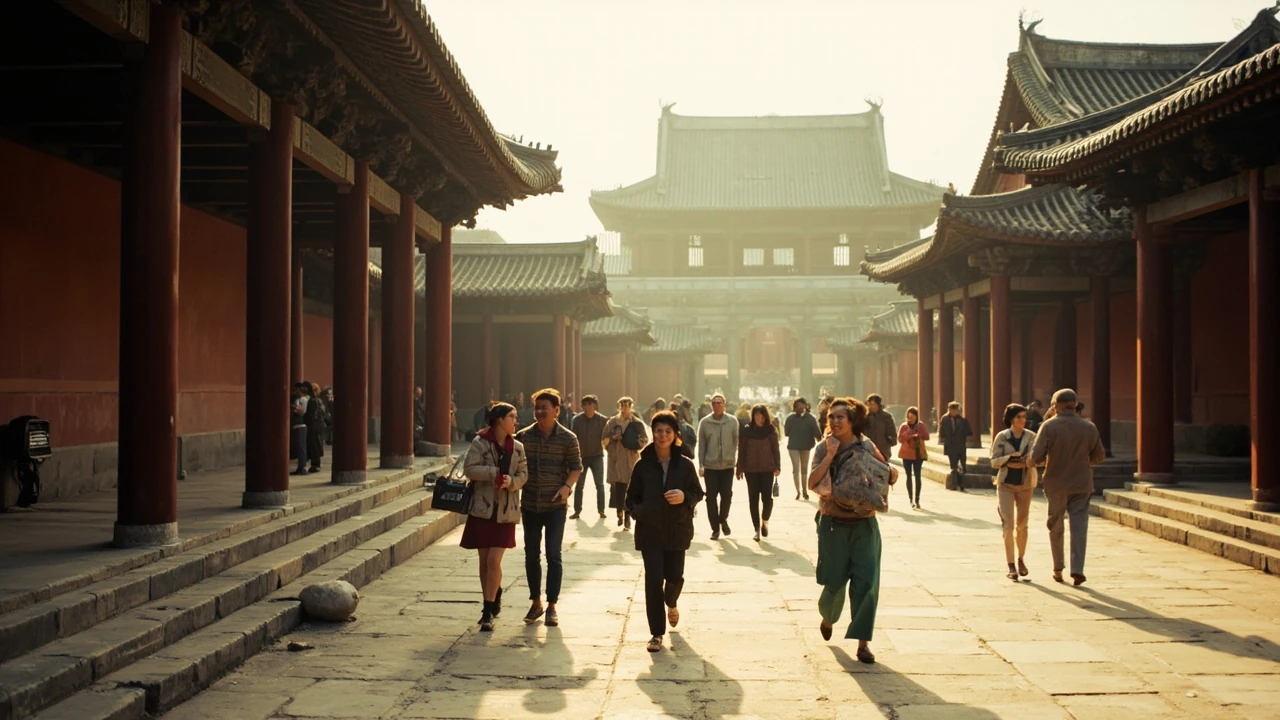
Imperial palace: how to choose the right historic destination
Choosing an imperial palace for a trip involves more than picking the grandest gates or the most familiar name. An imperial palace can mean a working royal residence, a former seat of government, a palace district developed around an emperor’s court, or a historic building that now serves as a museum. The best destination depends on whether you want to explore imperial architecture, understand court life, walk through formal gardens, admire ceremonial gates, or visit a city where imperial history remains part of everyday life.
This guide compares the best-known imperial palace destinations in Japan, China, Vietnam, and Germany. It explains what each site is actually known for, who it was built for, and how the visitor experience differs. It also provides a practical way to choose one site without relying on incomplete photographs, outdated tour descriptions, or the vague idea that every royal complex looks the same.
Before booking, check the official visitor information for your chosen property. Admission arrangements, access to particular buildings, security procedures, seasonal opening patterns, and closure notices can change. An imperial palace may occupy a vast protected district, yet only part of that district may be open on any given day.
What does “imperial palace” mean?
The phrase describes a palace associated with an emperor, an imperial dynasty, or the political center of an empire. That definition is broad because rulers built their residences in different ways. Some complexes were designed as permanent administrative capitals. Others served as seasonal residences, hunting lodges, recovery retreats, or symbolic monuments intended to communicate authority through scale and placement.
For travelers, it helps to separate four broad categories:
- Residences still associated with a monarchy: These may contain ceremonial rooms, gardens, state apartments, or selected areas open to visitors while other sections remain private.
- Former imperial capitals: These complexes are often museums and heritage landmarks, with the remains of court ceremonies, palace halls, gates, and carefully preserved furnishings.
- Imperial cities: The palace forms the center of a larger planned settlement or walled enclosure, so the historical experience depends partly on streets, gardens, and surrounding architecture.
- Secondary imperial residences: Smaller or less familiar sites can provide a more intimate visit and may reveal how rulers lived outside their main capital.
This distinction matters when reading a review. A comment about impressive gates may make sense for one monumental complex, while another visitor’s praise for intimate rooms may reflect a palace that was never designed to hold a national administration. The word imperial palace signals royal or imperial association, but it does not guarantee a particular experience.
| Type of site | What shaped the visit | Best for travelers who want |
|---|---|---|
| Working or associated royal residence | Access rules, public rooms, gardens, ceremonies, and privacy requirements | A controlled glimpse of royal architecture and landscaped grounds |
| Former court and government complex | Museum routes, reconstructed halls, gates, ritual spaces, and historical interpretation | A broad understanding of imperial administration and ceremony |
| Imperial city or palace district | The relationship between palaces, walls, waterways, temples, gardens, and urban streets | A destination where history and present-day city life overlap |
| Secondary imperial residence | Smaller scale, seasonal use, less crowded routes, and a closer view of court life | A quieter visit with fewer monumental crowds |
Kyoto Imperial Palace versus Tokyo Imperial Palace
The two most recognizable imperial palaces in Japan answer different travel needs. Kyoto was the imperial capital for more than a thousand years and contains the former imperial court complex known as the Kyoto Imperial Palace. Tokyo’s palace occupies a restricted district in the center of the modern capital. The confusion is understandable because both sites combine ceremonial architecture, controlled public areas, and a continuing relationship with Japan’s imperial institution.
Choose Kyoto when the central interest is historical Japan. The former palace area provides a stronger sense of an old capital organized around court ritual, traditional buildings, gardens, gates, and carefully controlled movement through a large compound. Although visitors may notice modern city pressures around the broader palace zone, the attraction itself is about the layered remains of court architecture and the ceremonial geography of Kyoto.
Choose Tokyo when the priority is the imperial institution within a major modern metropolis. The palace district sits amid government, business, transport, and commercial activity, making the contrast between historical enclosure and urban density part of the experience. Access can involve designated viewing areas and organized public routes rather than unrestricted movement through the whole complex.
For a first Japanese palace visit, Kyoto generally offers the more historical setting. Tokyo is better for travelers who want to place the monarchy within modern city geography or combine a palace area with central Tokyo attractions. Neither choice guarantees access to every building. Interior access, route availability, and event-related restrictions can vary, so confirm the official arrangements on the date of travel.
- Choose Kyoto for: former court life, traditional palace compounds, gardens, and a city shaped by more than a millennium of imperial history.
- Choose Tokyo for: the ceremonial palace district within a modern capital and an efficient combination with urban sightseeing.
- Choose both for: travelers with several days who want to compare imperial ceremony in Kyoto with the monarchy’s contemporary setting in Tokyo.
Do not treat the journey from one palace to the other as an automatic day trip. Travel time, admission rules, walking distances, and security procedures deserve separate attention. Build each visit into a planned route rather than assuming the two sites offer the same combination of buildings and grounds.
| Question | Kyoto Imperial Palace | Tokyo Imperial Palace |
|---|---|---|
| What is the main historical emphasis? | Former imperial court life and the ceremonial architecture of an old capital | The imperial institution and palace district within a modern metropolis |
| Best travel priority | History, gardens, traditional surroundings, and a slower cultural visit | Imperial symbolism, central-city context, and efficient sightseeing |
| Visitor experience | Controlled routes among a historic palace landscape, with selected structures open | Designated public areas and viewing points within a restricted district |
| Main planning concern | Allow time to understand the large compound and avoid assuming every gate is accessible | Check current access instructions and allow for central-city security and traffic |
Huế: an imperial city built around a palace landscape
Huế offers a different interpretation of the imperial palace. The Vietnamese city developed as an imperial capital, and its palace complex forms the ceremonial center of a larger urban landscape associated with the Nguyễn dynasty. The relevant landmark is commonly called the Imperial City, a walled enclosure that contains several major structures, including the Purple Forbidden Palace. This distinction is important: an imperial palace may be understood both as a specific residence and as the central part of a designed city.
The experience in Huế is less about one monumental entrance and more about relationships. Gates, courtyards, halls, pavilions, lakes, gardens, and enclosing walls work together to communicate rank and order. A visitor moving through the complex encounters successive layers of controlled space. The architecture does not need to be understood through a single courtyard or throne room to make sense.
Huế also rewards travelers who connect the site with the surrounding city. The wider region contains historic tombs, temples, traditional houses, and other monuments from the same broad period of Vietnamese history. A palace-focused itinerary can therefore expand beyond the walls without losing its subject. The key is to treat the Imperial City as one element in a larger historical landscape rather than as an isolated museum.
Weather can materially affect how the complex feels. Outdoor halls, courtyards, shaded paths, and waterside spaces are all part of the visit, so a comfortable morning or late-afternoon plan may be more rewarding than trying to cross the site during the hottest part of the day. Bring practical protection from sun and rain, wear secure walking shoes, and allow time to slow down in the less hurried sections.
For travelers interested only in a single former imperial capital, Huế may feel more approachable than a vast ceremonial complex. Its scale is still substantial, but the sequence of spaces creates a clear progression. The palace becomes clearer as a record of court organization, ritual, landscape design, and the physical separation between the ruler and the surrounding city.
Beijing and the Forbidden City: scale, ceremony, and orientation
Beijing’s Forbidden City is the largest and most demanding imperial palace visit in this comparison. Built as the central palace complex of the Ming and Qing dynasties, it presents an extensive sequence of halls, gates, courtyards, walls, and gardens. Calling it “forbidden” describes its historical restriction and symbolic separation rather than the practical experience of a modern visitor.
The defining challenge is orientation. Major ceremonial buildings follow a strong central axis, while side routes and palace institutions reveal different aspects of court life. Visitors who understand the basic layout before arriving tend to move more confidently through the complex. They can recognize the progression from outer gates into more restricted courtyards and then toward the principal halls associated with imperial ceremony.
Plan based on the portion of the site that matters to you rather than attempting to cover every possible building. A first visit focused on the central ceremonial route can be demanding because of the distances involved. A longer stay may allow closer attention to gardens, side courtyards, architectural details, and collections associated with particular palace functions.
- For first-time visitors: Identify the principal axis and the major gates before entering, then build a route around a manageable number of sections.
- For architecture fans: Note roof forms, colors, courtyard proportions, carved details, gates, and the relationship between successive spaces.
- For museum-focused visitors: Check which exhibitions, collections, or conservation areas are open and plan them into the route instead of adding them at the end.
- For families: Choose shorter sections, set realistic walking limits, and use the palace’s layout to create a clear beginning and endpoint.
Do not confuse the Forbidden City with the wider city walls or with every historic structure in Beijing. The palace is one component of a capital whose architecture developed across dynasties and later imperial periods. It deserves a substantial block of time rather than a brief stop between unrelated attractions.
The For additional context, Wikipedia disambiguation page illustrates the range of places that may carry the label. Its list includes imperial residences in Japan and Germany as well as references to the Forbidden City and the Imperial City in Huế. That variety is useful for orientation, but it also explains why a travel search can become confusing: the same term can point to multiple sites with different builders, periods, functions, and visitor rules.
Because the site is extensive, comfort matters. Walking miles inside a monumental complex can become tiring even when the surrounding landscape looks easy to navigate. Rest breaks, water, sun protection, and realistic pacing are more useful than a checklist designed to maximize the number of photographed buildings.
Goslar and smaller imperial residences
Not every imperial palace was conceived as a vast national capital. Goslar in Germany offers a useful counterexample. Its imperial palace complex served as a residence for rulers of the Holy Roman Empire and fits into a historic townscape rather than a monumental walled enclosure. The scale, relationship with the surrounding streets, and preservation of medieval and early-modern streetscapes shape the experience.
A secondary residence often feels different from a primary court capital. The buildings may be understood through the lives of a relatively limited household rather than through an enormous bureaucracy. The surrounding town becomes part of the story because the palace did not stand entirely apart from daily urban life. For travelers interested in European history, architecture, and old-town atmosphere, this can provide a more intimate alternative to the scale of Beijing or Kyoto.
Imperial Palace of Goslar is part of a broader historic setting. Nearby buildings, streets, churches, and civic spaces help explain how the palace functioned as a residence and seat of authority. Allow enough time to move beyond the main interior and read the relationship between the complex and the town around it.
The smaller scale also requires a different interpretation. Fewer rooms do not necessarily mean less to learn. A compact palace can reveal details that are easy to overlook in a larger complex, including construction methods, domestic arrangements, later adaptations, and the practical distance between ceremonial and everyday spaces.
Choose the imperial palace that fits your trip
The best site is the one whose historical story, physical scale, and visitor conditions match your interests and time. Start with purpose rather than reputation. A traveler fascinated by royal ceremony may want the strongest palace atmosphere available. Someone interested in how imperial power was organized may prefer a large former government complex. A visitor who values gardens and walking may prefer a landscape-rich site, while someone interested in urban history may choose a palace embedded in a working city.
Use the following checklist:
- Define your main interest: Choose between court ceremony, architecture, gardens, imperial governance, monarchy, urban history, or a combination.
- Set a realistic time limit: Major complexes can consume a full day, while compact sites may work well within a broader city itinerary.
- Check the official visitor access: Confirm which areas are open, whether an advance reservation is required, and whether any event or security measure affects entry.
- Map the arrival point: Know which gate or station is most practical and do not assume that every exterior gate allows entry.
- Consider walking demands: Estimate how far you will travel across courtyards, corridors, gardens, and connecting approaches.
- Combine nearby sites carefully: Add museums, markets, temples, or neighborhoods only when the day still has enough time for a relaxed palace visit.
- Build a weather plan: Identify shaded routes, indoor sections, and the portion of the visit that can be shortened if weather becomes difficult.
Location also affects the value of the visit. Huế can be combined with the region’s other imperial-era monuments. Kyoto rewards travelers who stay long enough to move beyond a single famous district. Tokyo places the palace within a broad metropolitan itinerary. Beijing requires a more dedicated block of time because of the Forbidden City’s scale. Goslar works well as part of a compact historic-town trip.
Seasonal crowds deserve attention, but they should not determine everything. Spring blossoms and autumn foliage may increase demand around Kyoto, while summer heat can make large East Asian palace complexes more demanding. Choose your dates based on the broader trip, then adapt the daily route. A less popular weekday may offer a calmer visit, but confirm that it does not conflict with a local holiday or a scheduled institutional event.
| Traveler priority | Best starting choice | Why it fits |
|---|---|---|
| Monarchy in a modern capital | Tokyo Imperial Palace | The ceremonial and governmental setting is closely integrated into central Tokyo |
| Old capital and court tradition | Kyoto Imperial Palace | Former imperial life is expressed through historic compounds, gates, gardens, and ceremonial routes |
| Monumental scale and imperial government | Forbidden City in Beijing | The extensive palace complex offers the clearest examination of a major imperial capital |
| Imperial city in a tropical setting | Imperial City in Huế | Palace, walls, gardens, water, and surrounding monuments form a unified historical landscape |
| A compact European royal residence | Imperial Palace of Goslar | The experience joins palace history with an intimate historic town |
How to plan a palace visit without wasting time
A good palace itinerary begins with a realistic route. Download or save the official map when one is available. Identify the entrance you will use, the principal route through the complex, and the exit or transport point. Some large sites can consume several hours even when a visitor sees only a fraction of the rooms. Distance matters as much as the number of attractions.
Arrive with a priority rather than an open-ended mandate. Three possibilities work well:
- A highlights visit: Focus on the main ceremonial axis, a few representative buildings, and the transition between major courtyards. This suits travelers with limited time.
- A themed visit: Concentrate on architecture, gardens, court objects, religious elements, defensive planning, or the life of the imperial household.
- A slow contextual visit: Combine the palace with the surrounding district or region, allowing the story of imperial power to extend beyond the main enclosure.
For large complexes, note where water, seating, shade, and rest opportunities exist rather than assuming they will appear at convenient intervals. Bring only what is practical, keep valuables secure in crowds, and wear footwear suitable for extensive walking. Photography rules may differ between courtyards, interiors, ceremonies, or restricted areas, so read current guidance before raising a camera.
Language can also improve the visit. Identify the major buildings in Japanese, Chinese, or Vietnamese before you arrive. Learning a handful of terms—such as gate, court, hall, pavilion, garden, and inner chamber—helps you read maps and listen to explanations. A local guide can add value at a complex where the sequence of spaces carries the meaning, particularly if the written information is not available in your preferred language.
Keep buffer time. Security screening, navigation, restricted routes, and unexpected closures can alter the pace. A comfortable plan leaves room to stop in a courtyard, inspect architectural details, or follow a less crowded side route. The goal is not to tick off every possible site. It is to understand how the palace worked as a place.
Travel responsibly around historic royal sites
Imperial palaces are heritage properties, but many also function as institutions, protected residences, or active ceremonial spaces. Responsible travel starts by respecting the distinction between a museum and a functioning royal setting. Follow photography rules, keep to marked routes, and do not treat restricted areas as challenges to solve.
In heavily visited locations, small behaviors have a cumulative effect. Do not block a gate to obtain a photograph, cut across planted areas, climb decorative structures, or place personal belongings against historic fabric. When a building is crowded, move forward gradually and give other visitors room to examine the same feature.
Respect communities as well as monuments. Imperial palaces were supported by labor, taxes, trade, military power, and systems of social hierarchy. A responsible visit acknowledges that the preserved site is only one part of the historical story. Interpretation should not reduce the experience to royal glamour while ignoring the broader systems that made the court possible.
Choose local guides carefully, compare official visitor information with reputable secondary sources, and avoid tour claims that promise unrestricted access. If a product promises to bypass security, enter closed rooms, or arrange special access without a legitimate basis, it is not offering a better version of the visit. It is asking visitors to disregard the rules that protect the site.
Leave room in the itinerary for more than one type of heritage experience. A nearby museum may explain collections that cannot be viewed inside the palace, while a city walk can show how the complex was supported by surrounding streets and services. For perspective on other cities where historic structures shape daily life, the walking guide to Tunis offers a useful contrast with North African palace and museum traditions, while the account of Genoa’s historic character illustrates how elite residences can exist within a dense, working urban fabric.
Frequently asked questions
What is the most famous imperial palace?
The Forbidden City in Beijing is the largest and most frequently associated with a major imperial capital, while the Imperial Palace in Tokyo is closely linked with Japan’s continuing monarchy. The best-known destination depends on whether fame means scale, current royal institutions, or historical influence. Kyoto Imperial Palace is often the more compelling choice for travelers interested in a former court capital.
Are the Imperial Palace in Tokyo and Kyoto Imperial Palace the same place?
No. They are separate palace complexes in different cities. The Tokyo palace is within the modern capital and associated with the present imperial institution. Kyoto contains the former imperial palace area of the historic capital. Their architecture and visitor arrangements share elements of Japanese palace tradition, but they create very different experiences.
Which imperial palace is best for a first visit?
Choose according to interest and available time. Kyoto is well suited to visitors who want former court history, traditional compounds, and gardens. Tokyo suits those interested in the monarchy within a modern city. Beijing is the strongest choice for monumental scale. Huế offers an integrated imperial-city landscape, while Goslar provides a more compact European town experience.
How long should I allow for the Forbidden City?
Allow substantially more time than a quick museum stop. Even a highlights visit requires considerable walking across large courtyards and axial routes. A focused morning can cover the principal ceremonial sequence, while a full day provides room for side courtyards, gardens, collections, and slower architectural study. Confirm current entry arrangements and choose a route before arriving.
Can you visit every part of an imperial palace complex?
Usually not. Some imperial palaces remain associated with royal institutions, while others include private, administrative, ceremonial, or restricted areas. Even museum-managed complexes may close particular buildings for conservation, exhibitions, ceremonies, or maintenance. Check the official visitor information for the exact date and do not plan around a room or gate without confirming that public access is available.
Is Huế’s Imperial City the same as the Forbidden City?
No. They are separate historic palace complexes in different countries. The Forbidden City is in Beijing and represents the immense ceremonial and administrative center of the Chinese imperial court. Huế’s Imperial City is in Vietnam and is understood as part of a planned city containing gates, halls, pavilions, gardens, waterways, and enclosed compounds.
Which imperial palace is easiest for travelers with limited mobility?
No complex should be assumed accessible without checking current information. Visitors may encounter long routes, uneven surfaces, stairs, restricted paths, security controls, and areas closed to standard admission. Ask the site about step-free entrances, accessible restrooms, seating, and accessible portions of the route. A compact itinerary is often more manageable than trying to cover a large site at maximum speed.
Is it better to visit an imperial palace in the morning or late in the day?
The better choice depends on weather, crowds, and the site’s layout. Morning visits can offer cooler conditions and a sense of having the complex largely ahead of you. Late afternoon may create attractive light but can leave insufficient time before closing or admission cutoffs. Do not use sunset as the planning anchor; verify the final permitted entry time and build the route around actual access hours.
Do I need a guide for an imperial palace?
A guide is helpful when the meaning depends on a sequence of spaces, historical names, or court ritual. Self-guided visits can also work well if you choose a clear theme, study the official map, and focus on selected areas. On a large or culturally complex site, a licensed guide can prevent wasted time and provide context that signs alone may not convey.
What should I pack for an imperial palace visit?
Pack comfortable footwear, water, sun protection, and a light rain layer. Bring a small day bag rather than heavy luggage. Portable charging, tissues, and medication may be useful, but visitors should follow local rules on food, beverages, and bag size. A downloaded map can provide resilience if paper materials are unavailable or mobile connectivity is inconsistent.


Leave a Reply