

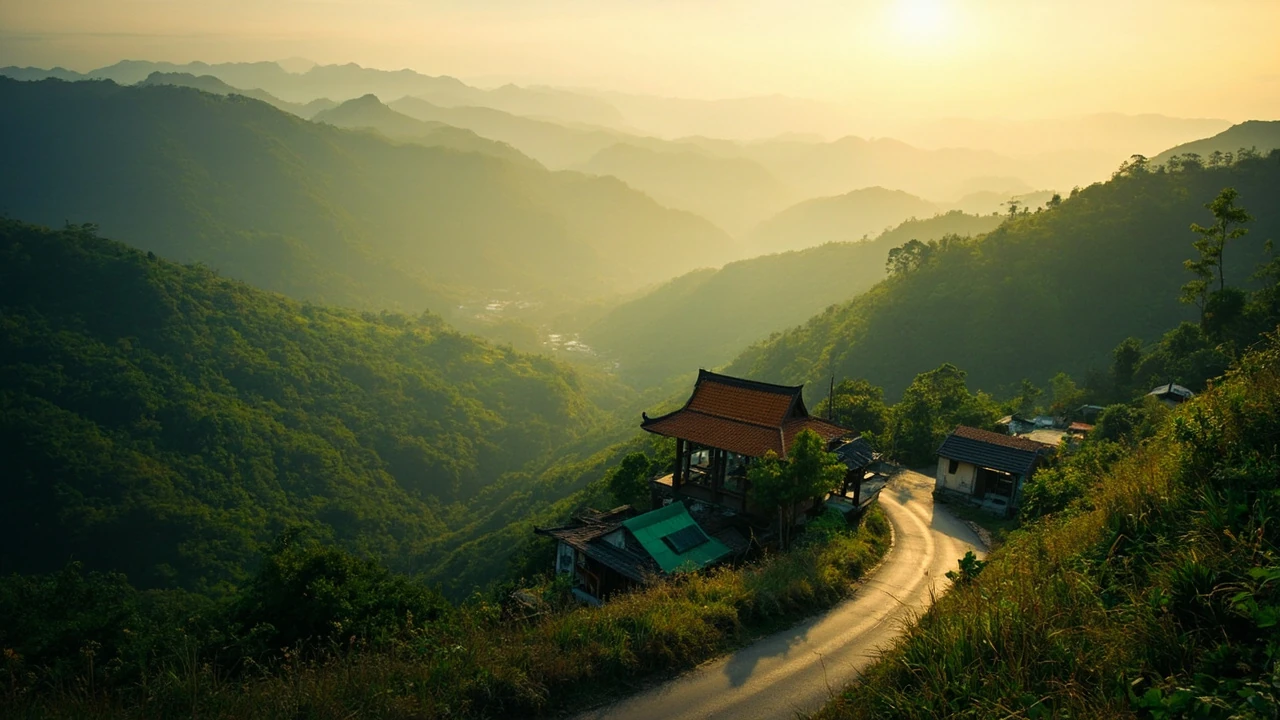
Mae Hong Son travel guide: what to expect in Thailand’s mountain north
A long journey into the hills can leave travelers with two very different impressions of Mae Hong Son. One group arrives during the rainy season and sees saturated green slopes, swollen streams, and a landscape that appears almost impossible to cross. Others arrive in the cooler, drier months and find clear mountain views, quiet roads, and enough daylight for long walks. The destination rewards a little planning because its distances look manageable on a map but can consume most of a day on mountain roads.
This guide focuses on the practical side of visiting Mae Hong Son: when to go, how the town connects to Chiang Mai and Bangkok, which activities deserve extra travel time, and how to build an itinerary that does not feel rushed. The town is the provincial capital and a common base for visits to nearby hill-tribe communities, caves, waterfalls, and hot springs. It also has an airport, a bus service, and the Mae Hong Son loop road, but those options serve different schedules and levels of comfort.
Travelers often arrive with a list of dramatic places to photograph but without a clear idea of how those places fit together. A realistic visit balances one or two signature outings with time to explore the town, slow down around meals, and account for mountain weather. The information below is designed to help with that balance, without inventing fixed tour prices, daily schedules, or guaranteed opening times.
When to visit Mae Hong Son for the best travel conditions
Season choice matters more here than in many other parts of Thailand. The town experiences a tropical savanna climate, with a pronounced wet season and a warm, dry winter. The official geographical and historical background of the town and surrounding province also explains why weather and road conditions deserve attention before booking an excursion.
| Period | Typical conditions | Travel advantages | Planning concerns |
|---|---|---|---|
| May through October | Monsoon rain, humid air, and cooler daytime conditions than in the hottest part of the year | Lush scenery, fuller waterfalls, and a strong green landscape | Heavy rain may affect trails, viewpoints, roads, and outdoor schedules |
| November and February | Often considered more comfortable for sightseeing, with lower rain risk and pleasant conditions varying by day | Good balance for caves, villages, waterfalls, and longer drives | Popular periods can fill guesthouses and tour vehicles |
| December through January | Cooler mornings and evenings in the hills, with generally dry weather | Comfortable for walking and clear views after rain | Cooler evenings require an extra layer; year-end holidays may increase demand |
| March through April | Increasing heat; April is typically the hottest part of the year | Dry roads and a good chance of clear conditions for remote stops | Heat stress, fire risk, and reduced comfort during long outdoor visits |
Travelers focused on waterfalls may prefer the wet season, while those planning several full-day outings often find late fall, winter, or early spring easier to manage. The most important rule is to leave room for rain. Even in a generally dry period, a mountain downpour can make a trail slippery or temporarily interrupt access to a natural attraction.
Pack for variable conditions rather than checking a single temperature range. A light rain shell, breathable shirts, walking shoes with grip, and a layer for cool mornings can cover most weather shifts. Sunglasses and sun protection are also useful because the open valleys receive strong sunlight even when the air feels pleasant in the morning.
- Ask a guesthouse or operator whether recent rainfall has affected the sites you want to visit.
- Keep a flexible sightseeing block in case a trail or road needs a different sequence.
- Start early during the hottest months and move strenuous walks to the cooler part of the day.
- Do not rely on a single weather forecast for a full-day excursion into the hills.
Getting to Mae Hong Son: flight, bus, or the scenic loop
Mae Hong Son lies in northwestern Thailand, roughly 251 kilometers from Chiang Mai and much farther north of Bangkok by road. This separation explains why a flight can save considerable time while a bus or self-drive journey becomes part of the experience. The town is also reached by the Mae Hong Son loop, a mountain route connecting the area with Chiang Mai and other northern destinations.
| Travel option | Best for | Main advantages | Main limitations |
|---|---|---|---|
| Domestic flight | Short, time-efficient trips or travelers with limited mobility | Fastest practical arrival from Bangkok or Chiang Mai when schedules and fares align | Air schedules and fares can change; ground transport is still needed after landing |
| Bus or shared transfer | Budget-conscious travelers who want to experience the route | Often lower-cost than flying and direct to the town | Long, winding journey; mountain roads can become tiring in poor weather |
| Private driver | Groups wanting flexibility, extra baggage, or door-to-door service | Allows a personalized itinerary and avoids navigating unfamiliar roads | Usually the most expensive option and still subject to weather delays |
| Self-drive or motorcycle | Experienced riders seeking control over stops and timing | Flexibility after reaching the area; direct access along the loop | Requires confidence on narrow or steep roads; insurance and local driving rules matter |
Flights are most useful when the trip is short. A traveler who spends only two days in Mae Hong Son may lose a substantial share of the visit to reaching the town and transferring to an outlying attraction. For a longer journey, the bus or a private transfer can offer a more gradual introduction to the northern landscape.
Road schedules should be confirmed shortly before departure. In the wet season, visibility, road conditions, and stream levels may affect travel times. Drivers should not attempt to bypass closures or continue toward a waterfall simply because it appears in a travel guide.
Self-driving gives the greatest sense of independence, but drivers unfamiliar with mountain roads should consider the distances carefully. A short map segment can contain repeated bends, steep grades, villages, and animals or pedestrians near the roadway. Motorcycles also require experience with local traffic patterns and may be less practical for couples traveling with substantial luggage.
Choosing a base and setting realistic daily boundaries
Most visitors use Mae Hong Son town as their base because it provides the broadest range of guesthouses, restaurants, transport connections, and tour services. Staying near the town also makes short outings easier to organize, although some mornings may begin early enough to require a reliable wake-up call.
Accommodation options range from simple guesthouses to hotels with more formal facilities. Before booking, compare location with practical needs rather than choosing only by price. A central property may be convenient for restaurants and airport transfers. A room farther from the busiest area can feel calmer, yet a private car may still be necessary for visits beyond walking distance.
- Ask whether the property has reliable hot water, air conditioning or heating, and secure parking.
- Confirm whether the advertised room is a mountain-view room or simply a property with a distant view.
- Check noise conditions around the property, especially if a nearby road, restaurant, or tour departure causes early activity.
- For longer stays, verify that the rate includes the services you expect and whether laundry or storage is available.
Plan one major excursion per day rather than filling a schedule with several distant stops. Travel time includes more than the distance on a map. Drivers may need to slow for bends, allow motorcycles to pass, stop for fuel or meals, and adjust to local road conditions. The result is that two nearby-looking destinations may occupy most of a day.
A useful daily plan includes a departure buffer, one anchor activity, a meal break in or near the mountains, and a final return that does not depend on the last flight or bus of the day. Visitors who build an overnight stop at a waterfall or remote lodge should reconfirm the return schedule and current access conditions before leaving town.
Best experiences around Mae Hong Son without rushing
The area is known as a jumping-off point for hill-tribe villages, caves, waterfalls, and nearby hot springs. The attractions are dispersed, so the best choice depends on the interests of the group and how much driving it can absorb. Choosing two or three gives each outing a reasonable chance of becoming more than a quick photo stop.
| Experience type | What travelers can look forward to | Best time to plan | Important consideration |
|---|---|---|---|
| Waterfall and nature outing | Forest scenery, flowing water, and relatively cool surroundings | Wet season for the strongest flow; drier months for easier access | Recent rain can make trails slippery or steps unsafe |
| Cave visit | Large rock formations, tunnels, and a change from the outdoor landscape | Drier months, beginning early in the day | Stairs and uneven surfaces may be difficult for some visitors |
| Hill-tribe village visit | A closer look at local communities, livelihoods, architecture, and food | Dry or partly dry weather with a guided local host | Use a responsible operator and ask before photographing people |
| Hot-spring visit | A relaxing stop among the province’s geothermal attractions | As part of a mixed countryside itinerary | Facilities and access vary by site; check current arrangements |
| Scenic countryside drive | Changing hills, rural settlements, viewpoints, and quiet road sections | Late morning through afternoon in dry weather | Keep enough fuel and avoid overfilling the day with distant stops |
A cave and waterfall combination often works well because the two activities suit different parts of the day. Caves can be visited in the cooler morning, followed by a forest stop or a longer waterfall walk. The order can be reversed when recent rainfall makes a particular trail more suitable in the afternoon.
Hill-tribe visits require the most thought. These communities are not tourist attractions designed around a standard visitor script. A responsible visit supports local guides and vendors, follows requests about photography, and avoids treating homes or ceremonies as public exhibits. Ask the host what the group will see, whether food or demonstrations are included, and how long the visit will last. Keep in mind that a village is a living community, not a set of decorative objects arranged for tourists.
The wider province also includes the well-known wild sunflower landscape around Thung Dok Bua Tong in Khun Yuam, where seasonal flowering can cover hillsides. The flowering period is weather-dependent, and the location is roughly 80 kilometers from Mae Hong Son, so it deserves a dedicated day rather than an attempt to combine with several distant stops. Verify the current seasonal conditions locally before making the drive.
A practical three-, four-, and five-day itinerary
The best itinerary depends on whether the traveler arrived by air and which attractions matter most. Rather than promising a fixed timetable, the following structure shows how to distribute travel, outdoor activity, and recovery. Operators can adjust the order according to weather, road access, and the departure time of a flight or bus.
| Trip length | Day 1 | Day 2 | Day 3 | Day 4 | Day 5 |
|---|---|---|---|---|---|
| Three days | Arrive, settle in, eat, and take a short town or nearby viewpoint outing | Full-day waterfall, forest, or countryside excursion | Second major outing or cultural visit, then depart if the schedule allows | — | — |
| Four days | Arrival and orientation | Waterfall or nature outing | Cave and hill-tribe program | Flexible scenic day, hot spring stop, rest, and departure | — |
| Five days | Arrival and light exploration | Major waterfall day | Cave and countryside combination | Responsible village visit with time for a second activity | Seasonal countryside drive or relaxed final day |
For a three-day visit, the easiest approach is to reserve two full days for outings and treat the arrival day as a buffer. The town itself is worth seeing without attempting to rush to the province’s farthest points. Many travelers also find that a quiet final morning helps them recover from long drives and gives unexpected excursions a chance to adapt to the weather.
A four-day itinerary creates a useful balance between active sightseeing and cultural travel. One day can concentrate on caves and another on a waterfall. The village visit then receives a full block rather than being compressed between two transport-heavy activities. On the final day, a short scenic drive or hot-spring stop can provide closure without creating another exhausting transfer.
With five days, travelers can choose two natural outings, one cultural visit, and a slower countryside day. This is also a better length for combining Mae Hong Son with a longer northern itinerary. Avoid adding distant destinations merely to make the map look impressive. Extra mileage in the mountains often reduces the amount of time available for the places already selected.
- Start with the activity most likely to disappoint if weather changes, such as a rain-sensitive waterfall visit.
- Place community visits in a smaller group where possible, with enough time for conversation rather than a rapid transfer.
- Keep one flexible period for a shorter alternative if the preferred route is unsuitable.
- Do not schedule a flight or bus connection immediately after a long excursion; mountain journeys take longer than many travelers expect.
Food, culture, and respectful visitor behavior
Thai food in Mae Hong Son includes familiar regional dishes alongside influences connected to the province’s northern location and diverse communities. Vegetarian food is available, and travelers with specific dietary needs should communicate them clearly rather than assuming every kitchen can adapt a dish on short notice. Market areas and local restaurants also make it easier to sample several small portions instead of committing to one large meal.
Restaurants can become busy at popular meal times, particularly when groups and tour vehicles arrive together. For a more relaxed experience, visitors can ask the accommodation where meals are normally served and how far in advance the driver expects to stop for lunch. Eating at a roadside shop can also make sense when the route is long, provided the group keeps enough time to return to the planned schedule.
Language differences are part of the cultural context rather than a problem to solve with more shopping. A few useful Thai phrases, careful observation, and a willingness to accept uncertainty make interactions smoother. Visitors should not enter religious or private spaces without permission and should remove shoes where requested.
Photography deserves particular care in hill-tribe communities. Ask before photographing individuals, homes, ceremonies, children, or work areas. A guide can explain when and where photography is welcome, but the final decision belongs to the people being photographed. Buying crafts directly from makers can also support the community more directly than purchasing mass-produced souvenirs, provided the transaction is fair and the item was genuinely made there.
Travel slowly enough to notice where a product comes from, who benefits from a visit, and whether an activity respects the place it takes place in.
Travelers interested in how tourism affects communities may also find useful context in Colombia culture makes more sense when you stop looking for one version of it. The subject is different, but the principle applies: local culture should not be reduced to a checklist of colorful customs presented as a single, unchanged identity.
What to pack and how to prepare for mountain conditions
Packing for Mae Hong Son requires balancing tropical heat with cool elevations, rain, uneven ground, and long transfers. The amount of luggage also matters because a small room may have limited storage and a motorcycle cannot safely carry bulky bags. Soft-sided, compact luggage is usually easier to manage than rigid suitcases.
- Lightweight clothing that dries quickly and can be layered
- A compact rain shell and a small pack cover for outdoor excursions
- Walking shoes with reliable traction, plus sandals for lodges or hot-weather stops
- Sun hat, sunglasses, and sunscreen for exposed valley roads
- Personal medicines, a small first-aid kit, and any required health documentation
- Power bank, appropriate charging plug, and copies of important booking information
- Refillable water bottle if the accommodation and excursion operator confirm safe drinking-water practices
Roadside availability can be limited outside the town, so do not wait until the fuel gauge is nearly empty to refuel. A downloaded offline map is useful, but the driver or guide should remain responsible for navigation. Signals may be weak in some rural areas, making an advance check-in plan for a late arrival sensible.
Health preparation deserves attention because medical facilities outside major cities may be limited. Travelers should carry enough prescription medication for the full trip, plus a small buffer for delays. Anyone who needs refrigerated medicine, specialized care, or frequent access to a pharmacy should discuss the itinerary with a qualified clinician before departure. Those with limited mobility should ask about stairs, walking distances, vehicle access, and substitute activities before booking.
Money and document handling also deserve a simple plan. Keep the passport and payment cards secure, carry a small amount of local cash for small purchases, and avoid displaying a large amount of money. Confirm the latest entry requirements through official government or consular channels rather than relying on an old travel post.
A final checklist for a smooth departure
The day before leaving Mae Hong Son, check the practical details that can disrupt an otherwise successful journey. Confirm the pickup location and time in writing, review the baggage allowance for a flight or bus, and make sure travel documents are accessible. If the route includes a remote stop, ask the operator to explain communication limitations and what happens if rain changes the itinerary.
Leave time for the unexpected. Mountain roads may slow down for repairs, roadside activity, or a change in weather. A traveler with a flight connection should treat the journey to the airport or bus terminal as a full activity rather than a minor transfer. A small delay near a steep road or in heavy rain can consume the margin built into the plan.
Before arrival, travelers can build a more personal reference point by comparing walking-based city travel with Tunis is one of those cities that makes more sense on foot. The comparison is useful for setting expectations: Mae Hong Son is less about a dense walking itinerary and more about connecting a town, nearby trails, and a dispersed mountain landscape.
A sensible final packing check includes weather protection, footwear, medication, identification, a backup payment method, and enough water for delays. Keep a copy of the return schedule separately from the luggage that will be placed in the trunk of a vehicle. If the trip includes a flight, verify the airline’s current check-in and baggage rules directly.
Frequently asked questions
Is Mae Hong Son suitable for a first trip to Thailand?
Yes, provided the itinerary matches the traveler’s tolerance for mountain travel. Mae Hong Son is less convenient than a major coastal destination and may require a flight, bus, or long drive to reach. It rewards travelers who appreciate scenery, caves, waterfalls, local food, and cultural visits more than nightlife or dense urban attractions. A three-day visit is enough for a basic introduction, while four or five days allows a more comfortable pace.
What is the best time of year to visit Mae Hong Son?
Late fall, winter, and early spring generally offer a comfortable balance of cooler conditions and a lower rain risk. November through January can be particularly pleasant for sightseeing, although the busiest holiday periods may affect availability. The wet season from May through October brings dramatic greenery and stronger waterfalls, but visitors should expect heavy rain, slippery trails, and possible changes to road access.
How many days should I spend in Mae Hong Son?
Allow at least three days if the trip includes a flight or long bus journey. Four or five days is more comfortable for caves, waterfalls, a hill-tribe visit, and a countryside outing. Trying to cover the province in two days creates a schedule dominated by transport and makes it harder to adjust for weather or slow roads.
Is Mae Hong Son better for hiking, culture, or waterfalls?
The destination works well for all three, but the best visit usually centers on one or two interests rather than maximizing the number of stops. Waterfall travelers should prioritize conditions and trail safety, while culture-focused visitors need enough time for a thoughtful, locally guided community visit. Drivers can combine a cave with a shorter nature stop, although longer days should be limited.
Do I need a tour guide in Mae Hong Son?
A guide is especially useful for remote natural attractions, mountain roads, and visits to hill-tribe communities. Independent travel can work for experienced drivers and travelers who already understand the area, but it requires careful planning around road conditions and current site access. For a community visit, a locally connected guide can provide context and help ensure that visitors follow appropriate cultural practices.
Can I reach Mae Hong Son from Chiang Mai by road?
Yes. Chiang Mai is connected to Mae Hong Son through the mountain road commonly described as the Mae Hong Son loop. A bus, shared transfer, private driver, or self-drive are the main options. The journey takes longer than the straight-line distance suggests because of the route’s bends and elevations. Confirm departure times and current road conditions before setting out.
What should I wear when visiting waterfalls and caves?
Wear clothing that can dry quickly, shoes with good traction, and a light waterproof layer. Bring a change of clothes if the plan includes swimming or a waterfall visit that may leave you damp. Caves may involve stairs, steep sections, and uneven ground. Guests should follow site rules and use their judgment if heavy rain, flooding, or damaged steps make access unsafe.
Can families or older travelers visit Mae Hong Son?
Yes, with careful itinerary planning. Families and older travelers can use short outings, a private vehicle, and less demanding alternatives to strenuous hikes. Confirm walking distances, the number of stairs, bathroom access, and vehicle arrangements before booking. Travelers with significant mobility needs should ask whether a particular attraction can be adapted or replaced with a more accessible activity.
What is the most common mistake visitors make in Mae Hong Son?
The most common mistake is underestimating travel time. Mountain roads can make short distances lengthy, and rain or roadside activity can cause delays. Another error is booking too many attractions, leaving no space for rest, meals, or a weather change. A simpler itinerary with a reliable driver and flexible ordering is usually more enjoyable than a tightly packed list of distant stops.

Leave a Reply