
Greece tourist attractions: how to choose the right places for your trip
A first visit to Greece can seem difficult to plan because the country contains ancient ruins, whitewashed island villages, dramatic coastlines, mountain settlements, and cities where dinner begins after sunset. Trying to see all of them in one itinerary often turns a trip into a series of rushed transfers. The better approach is to choose two or three regions, identify the experiences that matter most to you, and build each day around one major stop.
This guide compares the most compelling Greece tourist attractions by setting, interest, and travel time rather than presenting them as a single ranked list. You will find practical combinations for first-time visitors, families, history enthusiasts, beach travelers, and travelers who want scenery without strenuous hikes. It also explains where a day trip makes sense, which places deserve an overnight stay, and what details should be checked before departure.
No single attraction represents the whole country. Athens gives access to major classical sites and a lively urban culture. The Peloponnese contains some of the most consequential ancient sites. Central Greece is strong on monasteries and oracles. Crete combines archaeological history with long coastlines, while the Aegean islands differ dramatically in terrain, scale, and the pace of everyday life.
Start with Athens and decide what you want from the city
The Acropolis is the obvious starting point for most visitors because the Parthenon and the surrounding archaeological landscape sit directly above central Athens. Early access or a timed entry plan can make the visit feel less compressed, but the surrounding neighborhood matters too. Monastiraki, the Ancient Agora, Kerameikos, and the Acropolis Museum each require their own attention, and trying to cover them all in one exhausting afternoon is a common mistake.
For most itineraries, the most efficient pattern is to devote one full day to the Acropolis area and the museum. You can walk through the major archaeological sites without rushing through every ruin in the country. The museum also helps make the site easier to understand because objects and architectural fragments are presented in context rather than as isolated monuments.
Athens rewards travelers who look beyond the headline ruins. The historic center around the Ancient Agora provides a different sense of the city, while the National Archaeological Museum is useful when you want a broader introduction to Greek antiquity. Kerameikos, once a major burial and pottery district, can be quieter and more atmospheric than the busiest sites.
Plan the evening separately. A rooftop terrace over the old city, a meal in Koukaki, or a walk toward the Acropolis after sunset gives you a different relationship with Athens than a day spent moving between attractions. If the city is only a stop before an island flight or an overnight train, prioritize the Acropolis and one neighborhood rather than adding distant day trips.
Think of the city as a base for comparison. A traveler who prefers dense museums and public transit may be happier in Athens than on a remote island. Someone who wants swimming, slow meals, and a car may prefer Crete, Corfu, or a larger island with road access. The right destination depends on the experience you want after you leave the airport or hotel.
Explore the mainland’s archaeological and sacred highlights
Mainland Greece concentrates several of the country’s most historically significant places, but the distances between them can be substantial. Athens, Delphi, Olympia, and the Peloponnese should not be treated as interchangeable day trips from the capital. Travel time between regions matters, especially when trains, roads, and ferry schedules do not align with the hours you want to spend at a site.
Delphi is the strongest choice for a focused excursion from Athens. The setting above the Gulf of Corinth, the sanctuary complex, the theater, and the views toward Mount Parnassus give the visit a distinct sense of place. Ancient theaters were not built simply for entertainment; their steep seating, acoustics, and relationship to the landscape make them worth studying even if you know little about Greek theater. The site involves slopes and stairs, so comfortable shoes matter.
Olympia offers a different historical focus on the ancient Olympic Games and the religious landscape of the western Peloponnese. It works well as part of a road trip that continues toward the mountainous interior or the western coast. Trying to make Olympia a rushed stop on the way back from somewhere else usually gives you less time than the site deserves.
Two major sites in the northeastern Peloponnese are Mycenae and Epidaurus. Mycenae connects the heroic stories that recur in Greek literature with monumental walls, gateways, and remains of a fortified settlement. Epidaurus is known for its ancient theater and its relationship to healing sanctuaries. Both make sense on a driving route, but Epidaurus also works as a day visit from Athens because of its proximity to the capital.
Farther south, Mystras and the fortified town of Monemvasia reward travelers who are willing to move beyond the familiar island-hopping pattern. Mystras preserves a layered Byzantine urban landscape, while Monemvasia occupies a dramatic rocky peninsula. These are not interchangeable sights. Mystras emphasizes buildings, streets, and ecclesiastical architecture; Monemvasia emphasizes the experience of moving through a compact fortified settlement.
A broad reference for classifying sites by type and country can help when comparing an archaeological stop with a museum or natural attraction. The For additional context, lists of museums and archaeological sites separate collections and places into useful subject groups without implying that every entry deserves the same amount of time.
Choose the Aegean islands by landscape, pace, and access
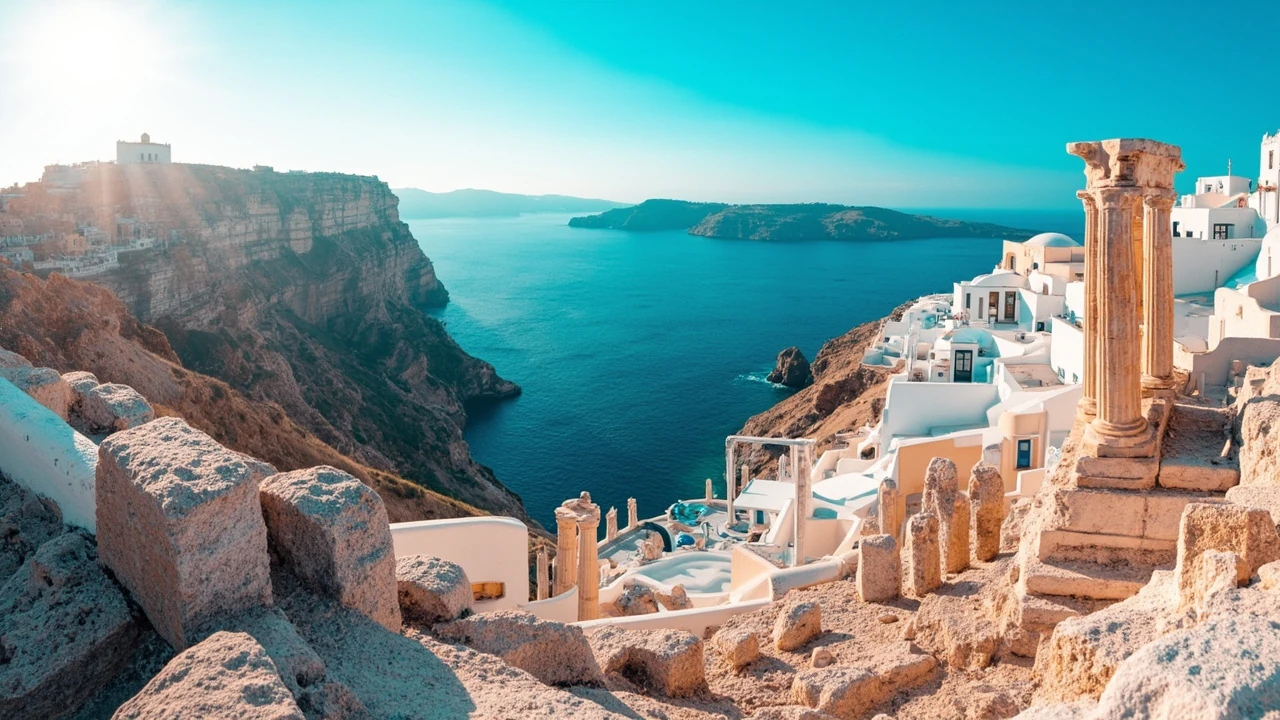
Santorini is frequently treated as the default island choice because its volcanic cliffs and whitewashed settlements are immediately recognizable. It is an excellent choice for scenery, short walks, food, and a clear island atmosphere. It is less suitable for travelers expecting long sandy beaches, heavy historical immersion, or easy car-free exploration of a large interior.
Milos is another strong option for unusual coastal scenery. The island is known for dramatic rock formations and beaches such as Tsigrado and Sarakiniko, although beach access, sea conditions, and seasonal closures can affect the experience. Rather than planning around one postcard cove, give the island time for a coastal road trip, a village, and a slower afternoon away from the most photographed viewpoints.
Mykonos and Naxos serve different purposes. Mykonos attracts visitors with a concentrated nightlife and beach scene, while Naxos offers a larger landscape of villages, mountain roads, beaches, and ancient remains. Naxos is often the better fit for travelers who want both relaxation and active exploration. Mykonos makes more sense for a shorter stay centered on the energy of a specific town.
Crete is large enough to function as a destination in its own right rather than a brief island stop. Heraklion provides access to important Minoan archaeological sites, including Knossos. The island also has mountain villages, southern beaches, wine regions, and scenic drives that can occupy several days. Choosing Crete for Greece tourist attractions means accepting more driving and planning in exchange for variety.
Rhodes combines a medieval old town, a reconstructed harbor district, coastal scenery, and inland landscapes. Corfu offers Venetian-era streets, a strong connection to green hills and water, and villages that feel different from the stark Cycladic islands. Lesvos and Kefalonia are more useful for specific interests, such as local food, natural scenery, or a less standardized island experience.
Choose the island before choosing the hotel. If the island is your main destination, staying in or near a village can provide a stronger sense of local life than lodging in a busy waterfront district. If you are using the island as a base for beaches or boats, the location of the accommodation may matter more. The distance from the airport or ferry port should be included in the decision, but it should not determine the entire itinerary.
See Meteora, the Pelion coast, and other landscapes beyond the classics
Meteora is one of Greece’s most distinctive Greece tourist attractions, with monastic communities and churches set high on sandstone pillars above the Thessalian plain. The engineering, geology, and religious history are compelling, but the site also involves climbing, steps, exposed paths, and shuttle or vehicle access. Visitors should plan for physical movement rather than treating it as a drive-by viewpoint.
Pelion offers a different combination of dense greenery, traditional villages, waterfalls, and Aegean or Pagasetic coastal scenery. It is often described as green because of its vegetation, but the experience also depends on the route and season. The coast near the broader Pagasetic Gulf can be visited by boat, while mountain villages reward travelers who are comfortable with steep roads and changing elevation.
The Vikos Gorge area in Epirus is a strong choice for hikers and nature-focused travelers. The route and viewpoints can be demanding, and weather can change the experience quickly. Zagori villages, bridges, stone paths, and mountain scenery create a more pastoral itinerary than the major archaeological circuit. Pairing a walk with nearby settlements works better than attempting to complete every marked trail in one day.
Northern Greece introduces landscapes and cultures that are often missing from a short southern itinerary. Thessaloniki has a dense waterfront, Byzantine monuments, a broad food culture, and easy access to the Chalkidiki region. The Meteora region can work as part of a northern mainland route, while Halkidiki offers beaches and coastal towns that suit travelers who want scenery without frequent ferry transfers.
On the southern side of the Peloponnese, the Mani Peninsula provides rocky coastlines, tower houses, mountain roads, and relatively quiet stretches of sea. The southern Peloponnese also has access to Elafonisos and other coastal areas, although some beaches are seasonal and access conditions can be basic. This part of Greece rewards slower travel and a willingness to accept that distances take longer than map lines suggest.
Natural attractions need the same attention as museums and ruins. Consider the heat, shade, footwear, transport, and the possibility of changing conditions. A dramatic view is not a substitute for safe access, and a beach with no shade or services may not be the right destination for a family outing.
Match major attractions to the kind of trip you want
The most useful Greece itinerary depends on your priorities. A history-centered trip needs enough time for archaeological context, while a beach-centered trip needs access to the right coast and a slow enough pace to use it. These differences are more important than the number of places on a checklist.
| Travel priority | Strong choices | Best way to spend time | Main limitation |
|---|---|---|---|
| First visit and ancient history | Athens, Acropolis Museum, Ancient Agora, Delphi | Two days in Athens and one focused day for Delphi | Athens traffic and the difficulty of day-tripping to every site |
| Scenic islands | Santorini, Milos, Naxos, Corfu | Three to five days with a mix of villages, coast, and one full slow day | Ferry connections and peak-season crowding |
| Beaches and relaxed days | Crete, Rhodes, Corfu, quieter parts of Naxos | Use a main base and make one or two regional excursions | Not every attractive cove has dependable services or easy access |
| Mountain scenery and walking | Meteora, Pelion, Zagori, Mani | Build in at least two days around the terrain | Steep routes, limited public transportation, and exposure to sun |
| Family travel | Crete, Rhodes, Athens with a day excursion | Alternate active sightseeing with a pool or beach afternoon | Ancient sites can be demanding for younger children |
| Food, towns, and slower culture | Thessaloniki, Naxos, Crete, Corfu | Stay in a town and explore nearby villages by day | Full-day meal schedules can overlap with early transport times |
You do not need to choose only one row. Many satisfying itineraries combine a strong historical base with a slower island stay. A common pattern is three or four nights in Athens, a scenic stop, and then several nights on one island. Adding a second island may be worthwhile when the ferry connection is straightforward, but a short stop can leave you changing hotels without seeing much beyond the harbor.
Think about the best version of the trip you actually want. Greece is geographically sprawling, and the cost of moving between places is not only the ticket price. It also includes packing, waiting, transfers, and lost time. Three well-chosen stops can create a more coherent story than six rushed ones.
Build an itinerary around travel time, not tourist checklists
A realistic itinerary is the foundation of any Greece travel plan. Start by deciding how many days you have, then reserve transport for the first and last legs. After those are fixed, the remaining days can be assigned according to location. Do not schedule a demanding archaeological morning and a distant sunset viewpoint on the same day unless the distances and transfer times are genuinely manageable.
For a first trip built around Athens and the mainland, a practical sequence might look like this:
- Day 1: Arrive in Athens and explore a central neighborhood without scheduling a major ticketed site.
- Day 2: Visit the Acropolis and Acropolis Museum, with a relaxed dinner afterward.
- Day 3: Choose Delphi or Epidaurus for a focused excursion rather than attempting both.
- Day 4: Travel to a selected island or northern mainland base, avoiding another full day of sightseeing during the transfer.
- Days 5–7: Divide the island stay between settlements, coast, a boat trip if conditions suit, and one unstructured day.
Allow one flexible day in most itineraries. Ferries can be delayed, a site may be more crowded than expected, weather can affect a boat excursion, or you may simply need time to rest. A flexible day does not mean leaving the destination unplanned; it means preserving enough room for the place to affect your pace.
For a road trip, plan one region per day rather than a chain of distant landmarks. The Peloponnese works well as a loop that eventually returns toward Athens, but an exit through a different port can reduce backtracking. Northern itineraries can combine Thessaloniki with the wider Chalkidiki region or Meteora, depending on the transport options available for your dates.
Travel times on maps often exclude the time needed to arrive at a port, collect tickets, find the correct transfer, or wait after an activity ends. When comparing a flight with a ferry or bus, consider door-to-door time and the risk of a missed connection. A faster vehicle may not produce a better day if it requires an early start or deposits you near the wrong end of an island.
Handle practical details before you arrive
Most major attractions can be ticketed, timed, or subject to access rules that vary by site and season. Check the official site for each major stop shortly before travel. The same advice applies to ferries and island transfers, which may use separate operators or booking systems. A place can remain open during a holiday while a particular museum, archaeological area, or monastery follows a different schedule.
Bring comfortable footwear. Greece rewards walking with uneven paving, ancient stone surfaces, hills, and steps, but summer heat can make an exposed site much harder than expected. A hat, water, and a plan for midday shade are more useful than trying to press through every stop during the hottest hours.
Pack for the place rather than for a generic Greek vacation. Lightweight clothing suits warm coastal weather, while a light layer matters on an evening ferry, in mountain villages, or during a spring and autumn archaeological trip. Swimwear belongs in the day bag rather than the bottom of a suitcase if the hotel is far from the beach.
Driving in Greece requires attention to signs, road markings, and narrow streets around older settlements. Mountain roads and small island roads can be slower than suggested. If you do not drive, compare island bus schedules carefully and ask how far in advance services run. A nominal connection between two towns does not guarantee a smooth transfer to a beach or trailhead.
Accessibility also varies. Some major sites have accessible routes, ramps, lifts, or adapted visitor areas, while terrain elsewhere may include cobblestones, steps, and uneven ground. Contact the individual attraction when you need detailed information. The best planning approach is to ask about the route from parking or drop-off to the main area, not simply whether the attraction has an “accessible entrance.”
Travel insurance, medication, and dietary needs deserve early attention as well. The country’s emergency and healthcare systems are not a substitute for insurance that covers the activities you actually plan to undertake. If you have a condition affected by heat or prolonged walking, adjust the itinerary rather than treating the itinerary as fixed.
Compare two very different ways to experience Greece
The city-and-coast combination and the island-only itinerary offer different travel rhythms. Neither is automatically better. The comparison below helps clarify which approach fits your priorities.
| Decision point | City plus island or coastal stop | Island-centered trip |
|---|---|---|
| Historical depth | Strong, especially with Athens or a mainland archaeological route | Uneven; some islands have excellent sites, while others offer little beyond scenery |
| Food and town life | Exposure to both a major city and smaller communities | Deeper local experience if you stay beyond the main harbor |
| Beach time | Possible at a coastal stop, but not guaranteed in the city | Usually easier, though popular beaches can be busy |
| Transport complexity | Higher because the itinerary crosses regions | Lower after arrival, though island transfers and excursions remain a concern |
| Best for | First-time visitors and travelers who want variety | Slow travel, specific island interests, and travelers with limited time |
Walking through an old city and moving between Greek islands require different kinds of attention. The earlier section on Athens and the nearby mainland is more practical for travelers who value streets, museums, and historical context. By comparison, a trip centered on an island is best planned around the specific character of that island rather than on the number of beaches or viewpoints you can collect.
For travelers who enjoy active city days, the ideas in Genoa Italy Is Rough Around the Edges – and Better for It show how an imperfect-looking port city can reward people willing to explore beyond the polished center. That approach transfers well to Athens, where a short walk toward the river, a side street, or a neighborhood meal can be as memorable as the largest monument.
A coastal itinerary has a similar need for perspective. The observations in Amalfi Coast Italy: What the Photos Don’t Tell You are useful because they focus on the gap between a visual impression and the reality of moving through a celebrated coast. Greece has similar realities: beautiful viewpoints can be busy, ferry days can be tiring, and the most memorable stop may be a village without a large attraction of its own.
A sensible final check is to compare the trip with your original priorities. If you planned a history trip but spent every day changing islands, the itinerary has drifted. If you planned to relax but scheduled five ticketed sites in two days, it has become too ambitious. The best Greece tourist attractions are the ones that support the trip you wanted rather than the ones that simply appear on the longest list.
Frequently asked questions
What are the best Greece tourist attractions for a first visit?
For most first-time travelers, Athens is the best starting point because it combines major ancient sites, museums, restaurants, and convenient transport connections. Add one island or one focused mainland excursion rather than trying to cover many distant places. A stay of three or four nights in Athens followed by several nights on one island gives you both historical context and a slower pace.
How many days are needed to see the main Greece tourist attractions?
A highlights-focused trip usually needs at least seven to ten days, depending on the number of transfers. This allows time for the Acropolis and museum, a coastal or island destination, and a slower day in a chosen region. Adding Delphi, the Peloponnese, Crete, or several islands requires more time because travel between them becomes part of the experience.
Which Greek island is best for a first visit?
Santorini is a strong choice for scenery and a clear island atmosphere, while Naxos suits travelers who want beaches, villages, and active exploration. Crete offers the broadest range of activities but requires more driving. The best island depends on whether your priority is romantic scenery, beach time, local towns, history, or family convenience.
Is Santorini better than Mykonos for a relaxing vacation?
Santorini can feel busy during the most popular periods because of its concentration of viewpoints, restaurants, and day visitors. Mykonos also has a lively scene, especially around the main town, but smaller accommodations and beaches can provide a more relaxed stay elsewhere on the island. Neither destination guarantees quiet, so ask for a specific location rather than relying on the island name alone.
What is the best time to visit Delphi and the Acropolis?
Spring and autumn usually offer comfortable conditions for extensive walking, while winter can be mild but wet and cool in some areas. Summer is popular for coastal trips and clear skies but can be very hot at exposed archaeological sites. Check official opening and ticketing information for your dates because schedules and access arrangements can change.
Are Greece tourist attractions suitable for children?
Many are, with the right pacing. The Acropolis Museum can be engaging for older children, while Delphi, Knossos, and some island excursions may work for families. Ancient terrain, heat, stairs, and long museum visits can challenge younger visitors. Alternate active sightseeing with a beach, pool, snack, or unstructured afternoon rather than trying to complete a full adult itinerary.
Do I need a car to travel around Greece?
A car is useful for regions such as Crete, the Peloponnese, Meteora, and mountain areas, but it is not essential for a city-and-island trip. Trains and buses can connect Athens with major mainland routes, while ferries handle the islands. If you rent a car on an island, confirm that your accommodation has parking and that you are comfortable with narrow roads and steep terrain.
Can I visit Greek islands without a car?
Yes, but base yourself well. Buses and taxis can reach many beaches and villages, though service may be limited, especially outside summer. Staying in a village or a larger town improves access to food and transport. Boat excursions can reveal inaccessible coastline, but they should complement rather than replace time on land.
How should I choose between Crete and the smaller Cyclades?
Choose Crete for road trips, a greater range of inland scenery, and a longer itinerary. Choose a Cycladic island such as Santorini, Naxos, or Milos when you want a more compact destination with a strong sense of village or coastal scenery. Naxos offers a middle ground between extensive exploration and smaller-island intimacy, but its size still calls for several days.
What should I check before visiting Greece tourist attractions?
Check the official opening calendar, ticketing rules, transport schedule, and site access for each major destination. Also confirm ferry or train times, luggage restrictions, weather conditions, and the distance from your accommodation to the site. Booking the first activity of the day and leaving a flexible afternoon can prevent a missed connection from ruining the itinerary.



Leave a Reply