
Myanmar country overview for thoughtful U.S. travelers
A trip to Myanmar can look simple on a map: one Southeast Asian country bordered by India, China, Laos, Thailand, and Bangladesh, with a long coastline along the Bay of Bengal and Andaman Sea. The reality is more complex. Bagan’s temple plain, Yangon’s busy streets, the mountains around Hsipaw, the waterways of Inle Lake, and the old city of Pyin Oo Lwin can feel like entirely different destinations. The same is true of daily life, where Burmese, Shan, Kayin, Mon, Kachin, Chin, and other communities shape local customs, food, festivals, and regional identities.
This guide focuses on one practical question: how should a U.S. visitor understand the country and make responsible travel decisions? It does not treat Myanmar as an uncomplicated checklist of exotic landmarks. Security, political conditions, transport reliability, health precautions, entry rules, and regional differences can change faster than a guidebook can be revised. Anyone considering the country should first assess whether travel is appropriate at that moment and then build an itinerary that suits the conditions on the ground.
Myanmar country is best understood not as a single uniform experience but as a collection of distinct regions connected by shared history, language networks, trade, religion, and political reality. A responsible visit starts with that regional awareness and with respect for the people who live there.
Geography explains why Myanmar travel feels so varied
Myanmar stretches farther north to south than many travelers expect. Its shape helps explain why distances can feel longer, regional cultures can vary sharply, and a short flight may be a more realistic choice than a long road journey. Terrain ranges from the northern highlands and the Shan Plateau to the central dry zone, the Irrawaddy Delta, the forested hills along the western border, and tropical coastal areas in the south.
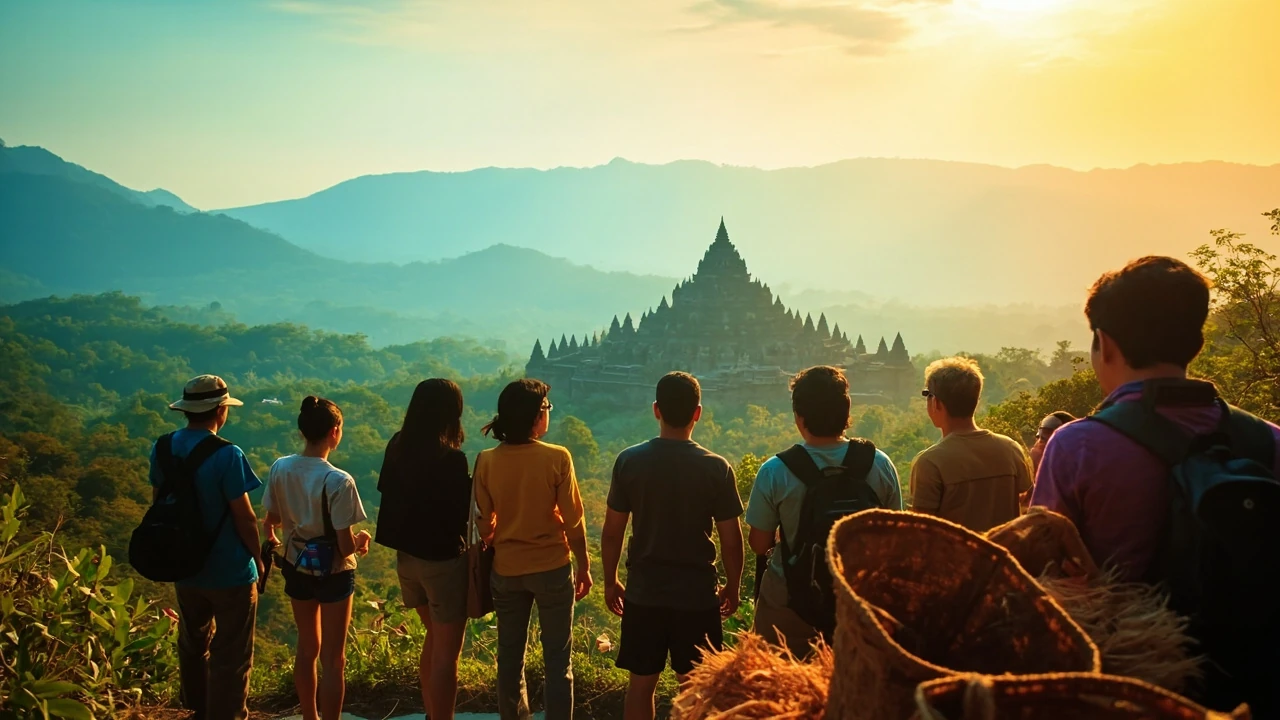
The country also contains several UNESCO-listed cultural landscapes. Bagan’s concentration of brick temples, monuments, and monasteries is the best-known example, while Ayeyarwady’s old capital area, the temples of Bagan, and the landscapes around Mount Popa reveal different layers of the country’s history. These sites are culturally important, but visiting them responsibly also means following local rules, dressing respectfully, avoiding disruptive behavior, and considering what tourism revenue does for the surrounding community.
| Region | What travelers commonly encounter | Planning consideration |
|---|---|---|
| Yangon | Colonial-era buildings, pagodas, markets, monasteries, museums, and a broad mix of neighborhoods | Useful as an arrival point, but urban traffic and neighborhood conditions require current local knowledge |
| Central dry zone | Bagan, Ayeyarwady, Mandalay, and nearby Buddhist sites | Heat, dust, long transfers, and limited nighttime sightseeing can shape a more comfortable pace |
| Inle Lake area | In-water movement, markets, craft traditions, and villages reached by boat | Plan around boat schedules, weather, responsible tourism practices, and variable road access |
| Shan State and the northeast | Mountain scenery, hill communities, trekking, tea, and distinctive regional traditions | Road and flight conditions vary significantly; conflict and restrictions may affect particular routes |
| Southern coast and islands | Beaches, diving locations, and access routes such as Kawthaung | Seasonal weather, island transport, marine conditions, and permit requirements need separate research |
Climate also depends on location and season rather than on a single national forecast. The central lowlands can be extremely hot before the monsoon, while the highlands and northern areas may be cool at night. The monsoon changes road access, flight schedules, river levels, and the condition of unpaved routes. A good itinerary therefore includes buffer time rather than placing every activity on the same day.
For visitors who enjoy cities, Yangon and Mandalay offer more familiar urban structures, although neither should be treated as a guarantee of effortless travel. Mandalay is a useful base for the central region, while Yangon has more flight connections, accommodation variety, museums, and cultural sites. Inle Lake provides a different rhythm based on waterways and walking. Bagan is primarily an overnight or multi-day destination rather than a convenient base for a broad tour.
- Compare the northernmost and southernmost parts of the country only after checking regional advisories and transport availability.
- Leave an extra travel day before an international departure; domestic delays can affect onward connections.
- Ask a reputable local operator which routes are operating normally rather than assuming every destination on a map is reachable.
- Use the rainy season to favor fewer destinations and longer stays instead of a fast cross-country itinerary.
Culture, language, and everyday life are more complex than a tourist narrative
Burmese is the country’s official language, but many people use regional or ethnic languages as well. English is widely used in some tourism, hospitality, and business settings, particularly in larger cities, although it should not be assumed everywhere. Learning a few Burmese phrases can improve interactions, yet respectful behavior matters more than performing a perfect greeting. Asking permission before photographing people, avoiding political conversation with strangers, and following posted rules at religious sites are simple ways to travel more considerately.
Religion occupies an important place in public life. Buddhist temples and monasteries can be active religious communities rather than simply sightseeing attractions. Visitors may encounter restrictions on footwear, clothing, photography, drone use, touching sacred objects, or entering certain buildings. Shoes should be removed where requested, and modest clothing is a practical expectation at many religious sites.
The arts provide a useful introduction to cultural diversity, but the country’s creative life extends far beyond a short list of famous workshops. Traditional textiles, lacquerware, thangka painting, pottery, wood carving, and contemporary design are produced in different regions and communities. Prices and production conditions vary, so “handmade” should not be treated as a sufficient description. A buyer can ask about the maker, place of production, materials, and whether the price supports local livelihoods without expecting every workshop to answer like a museum label.
Food also changes by region and religious practice. Rice, noodles, fish, leafy greens, chilies, fermented items, and curries appear across many kitchens, but a dish’s meaning and ingredients can differ considerably from place to place. Street food can be excellent, while the same meal may vary in hygiene depending on preparation and storage. Travelers with dietary restrictions should communicate in advance where possible and carry suitable backup food for long transfers.
Culture is also communicated through pace and etiquette. Teahouses can be sociable public spaces, religious observances may temporarily alter business hours, and conversations may move more slowly than a hurried exchange. Keeping a flexible schedule allows visitors to recognize when an ordinary place is doing something more important than serving tourists.
A comparison with another culture-focused destination can sharpen that awareness. Reading about Colombia culture and its many regional expressions is a useful reminder that national identity does not erase local distinctions, though each country’s history and present conditions are distinct.
Entry planning for U.S. passport holders
Entry and exit requirements depend on nationality, purpose of travel, itinerary, and the traveler’s passport validity. They can also change without much notice. A U.S. passport holder should consult current information from the relevant Myanmar authorities and the U.S. Department of State, then confirm details with the airline or land-border operator. Do not rely on an old forum answer, a generic travel blog, or a screenshot of a visa website.
Before paying for anything, verify whether the traveler is eligible for an electronic visa or must use another procedure, which arrival points are eligible, what supporting documents are required, how long approval takes, and whether the approved itinerary matches the actual booking. It is also important to distinguish permission to enter from the practical ability to reach the border. A visa confirmation does not guarantee that a flight, bridge, or border crossing will be open on a planned date.
| Planning item | What to verify | Why it matters |
|---|---|---|
| Passport validity | Minimum validity, blank-page requirements, and damage rules | A minor document issue can cause denial of boarding or entry |
| Visa or entry permission | Eligible passport, approved purpose, arrival point, processing time, and document format | Rules differ by traveler and may change |
| Return arrangements | Confirmed onward ticket, accommodation details, and contact information | Border officials may ask how the traveler plans to leave |
| Money and payment | Current currency rules, acceptable payment methods, and access to cash | Card acceptance and exchange conditions vary by place and operator |
| Arrival logistics | Open airport or crossing, transfer time, and reliable local contact | A delayed flight or closed route can affect the first night |
| Departure buffer | Separate time for the final domestic and international legs | Weather, road, and flight disruptions can compound |
Travel insurance can be useful, but the wording matters. A policy that assumes every itinerary is safe or every provider will refund a canceled trip may not cover conflict, government restrictions, border closures, or failure to board. Read the definition of “covered reasons,” documentation requirements, exclusions, and emergency assistance limits. If a consular alert advises against travel, a standard vacation policy may provide little protection.
Copies of the passport, visa approval, insurance certificate, medical information, and emergency contacts should be stored securely and accessible to a trusted person outside the traveler’s luggage. Digital copies are useful, but they do not replace the original documents. Avoid keeping every document and payment method in one bag or on one device.
Money, transport, and communication without false certainty
For additional context, Myanmar’s practical travel landscape can change quickly, so travelers should avoid relying on a remembered version of how a particular city “used to work.” Ask current questions about accepted currencies, exchange rates, card use, mobile coverage, internet access, and power availability. Carry a backup method for major expenses and enough local cash for places that cannot accept cards, but avoid carrying excessive cash or displaying it openly.
Domestic transport usually involves a choice among scheduled flights, road transfers, rail where available, and boats. The best option depends on the route. Flights can save time over difficult terrain, while roads offer more flexibility but may be slow or disrupted. Trains may provide a distinctive journey in applicable regions, yet class, schedules, and booking conditions need confirmation close to travel.
| Transport mode | Best use | Main risks to manage |
|---|---|---|
| Domestic flight | Long distances between major regional centers | Weather, limited schedules, baggage limits, and disrupted connections |
| Private road transfer | Door-to-door travel and scenic routes | Driver availability, road conditions, longer hours, and security concerns |
| Shared road service | Lower-cost regional travel where regular service operates | Fixed schedules may not suit a tight itinerary |
| Rail | Selected journeys where the route and timetable are suitable | Limited networks, booking difficulty, and variable comfort |
| Boat | Inle Lake and other waterways | Weather, water levels, vessel quality, and schedule changes |
Communication planning should include more than a roaming SIM card. A traveler may need connectivity for maps, translation, ride coordination, and emergency contact, but internet access may be uneven outside major centers. Download offline maps and translation resources, save addresses in local script where possible, and arrange a meeting procedure that does not depend on the traveler finding a specific street sign.
Travel with a reasonable amount of flexibility. A missed connection can mean an extra hotel night, a long wait, or a change in transport mode. A responsible operator should explain how such delays are handled and should not encourage a schedule that leaves almost no recovery time.
Safety decisions must come before destination selection
Political conditions, armed conflict, civil unrest, restrictions, and the presence of land mines can affect travel in Myanmar. The situation can differ sharply by state and even by district. A national summary is not enough to assess a particular route. Before booking, review current official travel advisories and talk to a qualified travel professional with recent destination knowledge.
Ask specific questions rather than receiving a general assurance. Which parts of the proposed itinerary are currently recommended against? Are there transportation or hotel closures? Can the operator explain how they monitor local developments? What happens if a road closes after the group leaves a city? Is the insurance policy valid if the traveler chooses to leave an advised area? Are there parts of the trip where English-speaking assistance would be limited?
It is also important to separate official advice from online commentary. Individual posts may be useful for recent observations, but they can be outdated, geographically vague, or contradictory. Look for multiple reliable sources, check publication dates, and use local expertise to interpret the conditions. When credible sources disagree, the more conservative approach is usually wiser.
- Register with the U.S. Department of State if the trip qualifies and ensure the information reaches a family member or colleague.
- Carry identification and emergency contacts without displaying sensitive information unnecessarily.
- Follow local curfews, checkpoint procedures, photography rules, and restrictions on movement.
- Do not photograph security forces, military sites, or sensitive infrastructure merely for social media appeal.
- Keep an evacuation or cancellation budget that does not depend on a last-minute replacement flight.
Conflict also affects ordinary travelers indirectly. A closed road can strand a bus. A hotel may be occupied by displaced people. A festival can be canceled. Remote communities may have less access to medicine or communications. A responsible itinerary leaves room for these realities rather than treating disruption as a minor inconvenience.
Health preparation for travel to Myanmar
Medical planning should begin before departure and be individualized. A traveler should discuss destinations, activities, medical history, medications, allergies, and vaccination history with a travel-medicine clinician. Advice should be current because disease patterns, recommended vaccines, and medication guidance can change. Travelers should also carry enough prescription medicine for the full trip plus a reasonable buffer, keeping original packaging and a clinician’s letter or other documentation where appropriate.
Food and water precautions matter in a setting where travelers may rely on street stalls, shared cups, ice, and food prepared in varying conditions. Hand hygiene, safe water, and attention to how food is cooked and stored can reduce risk. “Cook it, boil it, or peel it” is a simple rule, but it is not a guarantee. People who are pregnant, immunocompromised, managing a chronic illness, or considering remote trekking may need additional medical advice.
The For additional context, World Health Organization country page for Myanmar provides information about health profiles, publications, emergencies, and WHO programs in the country. It also highlights that conflict and instability can increase health risks. That is a reminder to consider not only exposure to pathogens but also access to care, continuity of medicines, maternal health, emergency response, and the ability to reach suitable medical help.
Travelers should know the location of appropriate medical facilities along the route and understand what their insurance covers. Remote areas may require evacuation by road or air, which can be slow and expensive. A comprehensive travel insurance policy should be evaluated on that basis rather than on its price alone.
Basic precautions include carrying hand sanitizer, sunscreen, insect repellent, appropriate clothing, and medication for common self-managed conditions. Heat, dehydration, altitude, and uneven walking surfaces can affect travelers who do not normally encounter them. If a symptom develops, the response should not depend on finding a pharmacy with exactly the same brand of medicine found at home.
Choosing an itinerary that respects place and limits
Many travelers imagine a fast route through the country’s highlights. That approach can produce long transfers, shallow experiences, and more exposure to disruption. A slower itinerary with fewer bases is usually more comfortable and gives travelers time to understand local rhythms. Two nights in one region can be more useful than one night in three cities when roads are unreliable and cultural sites deserve unhurried attention.
A city-based itinerary works best for travelers who value museums, food, architecture, and easy logistics. A cultural route around the central region may suit those interested in temples and historical landscapes. Lake and countryside travel appeals to visitors seeking slower outdoor experiences, provided the operator addresses responsible tourism and current safety. Mountain travel requires more careful assessment because terrain, weather, road access, and local security conditions can change the difficulty of a route.
Walking is one of the best ways to experience a city when conditions are suitable. The editor’s guide to Tunis and the value of exploring a city on foot offers a transferable lesson: streets reveal more than a checklist, but good footwear, realistic distances, and awareness of the local environment still matter.
Before booking, compare itineraries using the same criteria. The cheapest route may require more land transfers, while the fastest itinerary may offer little time to recover from delays. A premium option may improve the vehicle or guide but cannot remove regional instability. The best choice is the one that matches the traveler’s interests, health, budget, tolerance for uncertainty, and willingness to accept local restrictions.
- Choose two or three priority regions rather than attempting to cover the entire country.
- Remove any stop that depends on an unconfirmed transport connection or questionable operating condition.
- Add a buffer before the international departure and keep some budget uncommitted.
- Ask every operator for the same itinerary details in writing, including inclusions and exclusions.
- Compare the experience with local residents’ interests, not only the number of sights collected.
What responsible travelers should remember
A thoughtful Myanmar itinerary begins with verified information. The country’s distances, regional diversity, and current security environment make generic checklists especially unreliable. Confirm entry documents, transport, health needs, and local restrictions close to the booking date and again before departure. Work with operators who can explain what is operating, what is not, and how they respond when conditions change.
Once travel is underway, flexibility matters. Keep plans light enough to accommodate a delayed flight, a changed road, a closed attraction, or a local festival that takes priority over a tour schedule. Respect religious practices, ask before photographing people, use local guides where their knowledge adds context, and direct spending toward businesses that benefit the communities hosting visitors.
Finally, revisit the decision to travel if conditions deteriorate. A delayed trip is an inconvenience; a preventable security or medical problem can be serious. The most useful preparation is not simply a longer list of places to see. It is a clear understanding of the country as it stands when the traveler will actually be there.
Frequently asked questions
Is Myanmar safe for U.S. travelers?
Safety depends on current conditions, the exact itinerary, and the traveler’s activities. Because conflict, unrest, transportation restrictions, and other security concerns can affect particular areas, travelers should consult current U.S. Department of State guidance and qualified local expertise before booking. If official advice advises against travel to a planned destination, the traveler should consider a different plan.
What documents do U.S. citizens need to enter Myanmar?
Requirements can depend on passport status, purpose, and point of arrival. Travelers should verify current passport validity, visa or electronic-visa procedures, required supporting documents, and arrival arrangements through official sources. Rules can change, so a saved page or third-party summary should not be treated as final. The airline or border operator should also receive the correct documentation before travel.
Do U.S. credit cards work throughout Myanmar?
Payment acceptance varies by business, location, provider, and current conditions, so travelers should not assume continuous card use. Confirm current cash, card, and foreign-exchange rules with reliable sources. A practical approach is to maintain more than one backup method while carrying only a reasonable amount of cash and protecting financial information.
Is Bagan better as a day trip or an overnight stay?
An overnight stay is generally the more rewarding choice because the archaeological zone is extensive and visiting it at a normal pace requires several hours. It also reduces pressure to rush through temples and nearby sites. A day trip may suit a traveler with very limited time, but transport disruption and a long return journey can make it tiring. Current transport conditions should determine the final plan.
How much time should a visitor allow for Inle Lake?
Most travelers benefit from at least two nights so they are not forced into a rushed boat and road itinerary. Boat schedules, weather, and lake access can affect the visit, and some activities take place in the early morning. The ideal length also depends on interest in markets, villages, walking, cycling, crafts, and rest. Booking a wide range of activities before understanding current local conditions can create unnecessary pressure.
Can travelers visit mountainous areas of Myanmar?
Possibly, but access depends heavily on current road conditions, weather, local security, permits where applicable, and the availability of trained operators. Mountain routes can be physically demanding and may change in difficulty quickly. Anyone considering trekking should obtain current route-specific advice, assess fitness honestly, and ensure that emergency support is realistic.
What should travelers do if a flight or road transfer is canceled?
The response should begin with safety rather than forcing an unsafe substitute. Contact the operator, confirm alternatives with reliable local sources, and consider whether moving at night or taking an unverified road is appropriate. Keep travel insurance details and emergency contacts available. A well-designed itinerary includes spare time so a disruption does not automatically threaten an international departure.
How can visitors travel responsibly in Myanmar?
Ask permission before photographing people, follow religious and community rules, use local guides when they add genuine knowledge, and avoid treating residential spaces as open-air exhibits. Choose accommodations and guides that pay local workers fairly, minimize single-use waste, and explain the impact of tourism in the places they visit. Respectful behavior also includes avoiding political speculation with strangers and accepting that some experiences may be restricted.
What is the best season to visit Myanmar?
The answer depends on the region and itinerary. Some travelers prefer the cooler dry-season conditions in the central highlands, while others choose different periods to match regional weather, festival schedules, or marine conditions. The monsoon can alter roads, flights, water levels, and access to outdoor sites. Rather than choosing a single nationwide “best” month, compare conditions for each planned destination and allow for schedule changes.


Leave a Reply