

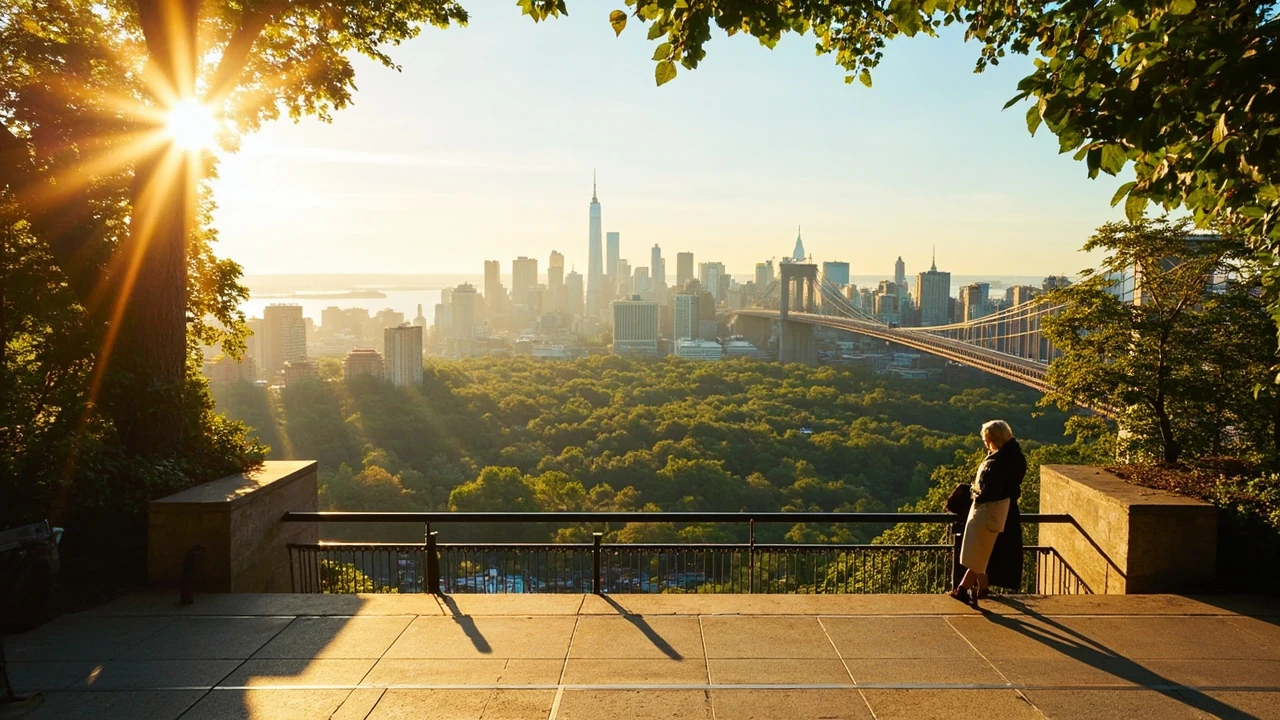
famous landmarks in new york: the essential sights for a first visit
New York City packs an extraordinary number of famous landmarks into a relatively compact area, but visiting the wrong ones first can turn a memorable trip into a contest against traffic and crowds. A first-time visitor might spend an entire morning crossing Manhattan to see the Statue of Liberty, only to discover that the statue is best appreciated on a longer waterfront trip. Another might begin with Times Square and later find that Central Park, the Metropolitan Museum of Art, or a walk across the Brooklyn Bridge offers a clearer sense of the city.
The most useful approach is to treat the major sights as parts of several distinct experiences rather than as a checklist of isolated attractions. Lower Manhattan connects harbor views, early American history, and the Financial District. Midtown delivers the recognizable skyline, Broadway energy, and major cultural institutions. Central Park provides space and perspective, while Brooklyn offers scenic bridges, brownstone neighborhoods, and broad city views. Knowing how those areas fit together makes it easier to choose a route that reflects your interests.
This guide focuses on the famous landmarks in New York that offer the strongest combination of visual impact, cultural value, and a sense of place. It also explains where to slow down, when reservations matter, and which practical details are best confirmed shortly before visiting.
| Landmark | Area | Best for | Plan for |
|---|---|---|---|
| Statue of Liberty | Lower Manhattan and Liberty Island | Harbor history, monumental sculpture, and views from the water | A specific ferry trip rather than an impulsive walk-on stop |
| Statue of Liberty Museum | Liberty Island | The statue’s construction, restoration, and immigrant connections | More time if you want to understand the monument, not only photograph it |
| 9/11 Memorial and Museum | Lower Manhattan | Memorial design, testimony, and the events of September 11 | Quiet attention and enough time for the museum |
| Wall Street | Financial District | Architecture, financial history, and the former site of the World Trade Center | A walking route with street-level stops |
| Empire State Building | Midtown | A classic skyline view and an Art Deco landmark | A timed observation-deck visit if that is your priority |
| Times Square | Midtown | Bright signs, Broadway theaters, and the atmosphere of a major commercial intersection | An evening stroll rather than the entire day |
| Grand Central Terminal | Midtown | Beaux-Arts architecture, the Main Concourse, and a functional transportation hub | Thirty minutes at minimum; longer if you enjoy architecture |
| Rockefeller Center | Midtown | Radio City Music Hall, Art Deco design, and a famous plaza | A combined visit with nearby Midtown sights |
| Central Park | Upper Middle | Gardens, paths, museums, boathouses, and a counterpoint to the streets | At least a few hours, spread across more than one visit if possible |
| Brooklyn Bridge | Lower Manhattan to Brooklyn Heights | Historic engineering and an elevated approach to the skyline | A walk, bicycle ride, or train followed by time in Brooklyn Heights |
How to choose the right New York landmarks for your interests
The most popular sights are not equally satisfying to everyone. Someone who loves monumental architecture may find Times Square interesting for a brief visit but prefer Rockefeller Center, Grand Central Terminal, or the Empire State Building. A traveler interested in art and history may get more from the Metropolitan Museum of Art, the 9/11 Memorial and Museum, or a guided architectural walk than from several additional observation points.
Start by choosing two or three anchor experiences, then add nearby stops around them. This prevents an ambitious itinerary from becoming a sequence of rushed photo stops. For example, pairing the Statue of Liberty with the Ellis Island National Museum of Immigration creates a coherent waterfront journey. Pairing the Met with the Brooklyn Museum supports an art-focused day on opposite sides of the city. Combining Rockefeller Center with a Broadway show fits naturally into an evening in Midtown.
Consider the following priorities when choosing among the city’s best-known places:
- For a first impression of the skyline: include an observation deck or elevated public viewpoint, then leave time to see the skyline from a street or waterfront perspective.
- For history: choose a route through Lower Manhattan or spend focused time at the 9/11 Memorial and Museum.
- For art: select one or two major museums rather than attempting several collections in a single day.
- For architecture: look for buildings that demonstrate different periods and styles, from Rockefeller Center’s Art Deco to the cast-iron streets of SoHo and the brownstones of Brooklyn Heights.
- For open space: give Central Park a substantial block of time and choose a specific destination within it.
- For a relaxed evening: visit Grand Central Terminal or Rockefeller Center outside the busiest midday hours and combine the stop with dinner or a show.
Timing also changes the experience. Midtown is often most atmospheric in the evening, when office lights, theater marquees, and illuminated buildings become part of the scene. Central Park works well in the morning for quieter paths and again near dusk for the contrast with Midtown’s brightness. Lower Manhattan can feel reflective on a weekday morning and considerably more crowded around the waterfront on weekends. These are general patterns rather than fixed rules, so it is worth checking local conditions before setting a detailed schedule.
Lower Manhattan: harbor symbols, memorial spaces, and the original city center
Lower Manhattan is where many visitors begin, but its most memorable places are spread across several distinct areas. Battery Park provides a useful starting point for harbor and skyline views. From there, the National Park Service’s official Statue of Liberty visitor information explains ferry access, island visits, and the practical details involved in reaching the monument. Because access rules and ticket arrangements can change, confirming the current process with the official site is wiser than relying on an old travel blog or a remembered visit.
The statue should be considered more than a photo stop. Its scale is most effective when seen from the water, where the figure rises above the harbor rather than appearing as a distant object in a skyline. Visitors who have time can also learn about the construction and restoration of the copper figure through the museum on Liberty Island. The deeper experience combines the changing skyline, the immigrant story, and the physical labor involved in building and maintaining such a large monument.
Ellis Island is a natural extension for travelers interested in immigration history, although the decision to visit the museum depends on how much time and emotional energy you want to devote to the subject. The island’s earlier immigration station has also served other purposes, and the National Park Service provides separate details for ferry service and site access. Confirm current ferry and admission arrangements for every stop you intend to make; a Statue of Liberty ticket does not automatically answer every question about the surrounding journey.
From the waterfront, the city’s financial and civic history unfolds inland. Wall Street is more than a street associated with money. Its narrow canyon of older buildings, the nearby streets associated with colonial New York, and the nearby World Trade Center site show how the financial district sits on top of much older layers of urban history. Walking rather than relying on a ride-hail makes it easier to notice these contrasts.
The 9/11 Memorial and Museum requires a different kind of visit. The outdoor memorial uses space, materials, water, and views of the surrounding skyline to create a deliberate memorial experience. The museum adds personal testimony, artifacts, and detailed interpretation. A thoughtful visit takes longer than a brief stop at the reflecting pools, and it benefits from an unhurried pace. Wear comfortable shoes, understand that the experience includes both the memorial and museum space, and check official access details before arrival.
A manageable Lower Manhattan sequence might be:
- Begin at Battery Park for a clear orientation and an open view across the harbor.
- Continue toward the Financial District, with stops selected for architecture and history rather than rushing around every intersection.
- Visit the 9/11 Memorial and Museum with a dedicated block of time.
- Finish near the waterfront or continue toward Chinatown and Lower East Side for a different neighborhood experience.
Walking is often the best way to understand the area’s scale, but distances are larger than they look on a map. A comfortable pair of shoes matters more than an ambitious number of street stops. Save the most important indoor attraction for a time when you are ready to focus rather than treating it as one item in a race against the clock.
Midtown Manhattan: the skyline, Broadway, and modern architectural icons
Midtown contains the New York image many visitors expect: tall towers, bright signs, yellow taxis, Broadway marquees, crowded sidewalks, and buildings associated with ambition and power. Its famous landmarks are close enough to combine, yet each rewards a different pace. You can spend an hour watching the street from Times Square, visit Radio City Music Hall, walk through Grand Central Terminal, and still leave the neighborhood without seeing every important nearby site.
Times Square is best treated as an atmosphere rather than a single attraction to “finish.” The area’s scale, screens, signage, theaters, and pedestrian movement create the spectacle. Visit in the evening if possible, when the visual impact is strongest, and choose a side street or nearby restaurant if you want more than a brief stop under the largest displays. Times Square also works well as an early orientation point because it is easy to reach and provides a clear sense of Midtown’s scale.
Rockefeller Center offers a more concentrated architectural experience. Radio City Music Hall is the area’s defining structure, with its broad façade, sweeping curves, and large auditorium. The surrounding complex includes art deco spaces designed to work together as an urban ensemble. Visitors can combine the plaza and nearby interiors with a Broadway or off-Broadway performance, although tickets, theater schedules, and building access should be checked independently.
The Empire State Building should not be judged only by its height. Its massing, setbacks, limestone facade, and Art Deco detailing help explain why it became such a visual symbol of New York. An observation deck provides the expected panorama, but the building’s architecture and historical presentation can make the visit more worthwhile for people who usually avoid tall observation towers. Timed admission may be required, and the current ticket structure should be confirmed directly.
Grand Central Terminal is a useful landmark because it is both beautiful and functional. The Main Concourse, celestial ceiling, stone details, and procession of information counters show how monumental public architecture can also orient thousands of travelers. It is worth visiting even when you are not catching a train. Arrive early enough to see it without rushing to a platform, and use the surrounding streets to compare the terminal with other Midtown towers.
Grand Central also makes a good transition point for a broader New York route. From there, visitors can walk north toward the public spaces around the New York Public Library and Bryant Park, east toward Rockefeller Center, or west toward Hudson Yards. The Grand Central Madison work expanded the terminal’s role, but the building still functions as a major neighborhood crossroads as well as a transportation hub.
For a focused Midtown itinerary, follow this order:
- Start at Times Square early enough to experience the area before an evening event or dinner.
- Walk to Rockefeller Center and allow time for Radio City Music Hall and the central plaza.
- Continue to Grand Central Terminal for architecture and wayfinding.
- Add the Empire State Building if an observation deck is important to your trip; otherwise, see it from a nearby street or park.
Central Park and Upper Manhattan: landmarks that reward a slower visit
Central Park is both a famous landmark and a collection of smaller places worth discovering. The park’s boundaries are easy to identify from many parts of Manhattan, but its interior rewards a specific destination. Visitors who simply enter, walk until they tire, and return to the nearest street often miss the designed views that make the park special. The Jacqueline Kennedy Onassis Reservoir, Conservatory Garden, Bethesda Terrace, the Mall, Bow Bridge, and several major museums each create a different setting.
Choose a theme before arriving. A walk around the reservoir suits travelers looking for a long, relatively open path and repeated views of the skyline. Bethesda Terrace and the surrounding lake work well for architecture and classic park scenery. The Ramble and nearby paths offer a more wooded experience. Families may prefer the Central Park Zoo, playground areas, or carriage rides, while art and history visitors can build a morning around the Metropolitan Museum of Art or the Solomon R. Guggenheim Museum.
The Metropolitan Museum of Art deserves more than a quick stop. Its collection covers art and design across many regions and centuries, and the building itself includes notable spaces beyond the famous façade. Because displays and access arrangements can change, check current information before going. If you are short on time, identify two or three galleries that interest you before entering. Trying to “see the whole Met” can be frustrating; a focused visit usually produces a more rewarding experience.
Upper Manhattan landmarks are often overlooked because the city’s best-known map concentrates on Midtown and Downtown. The Dakota, the apartment building associated with prominent residents and cultural history, overlooks Central Park’s western edge. The Harlem neighborhood has its own architectural and musical history, including the Apollo Theater. Columbia University’s campus, the Cathedral of St. John the Divine, and the Morris-Jumel Mansion offer another set of stops.
For perspective on historic entertainment architecture elsewhere in New York State, the Landmark Theatre in Syracuse is a useful comparison. It is not a Manhattan attraction, but its preserved movie-palace interiors show why theater architecture is an important part of the state’s cultural landscape. Syracuse’s Landmark also demonstrates how a community preserved an early twentieth-century venue and adapted it for later use. That context helps explain why Broadway theaters, neighborhood movie palaces, and contemporary performance spaces deserve attention beyond their nightly schedules.
Upper Manhattan works best when it is combined with Central Park rather than treated as a separate checklist stop. Walk from a museum to the park, continue to a neighborhood restaurant, or use a subway station in Harlem or Washington Heights as the beginning of a local walk. The skyline remains visible, but the pace becomes less formal and more connected to daily neighborhood life.
Brooklyn: bridge views, historic streets, and a different New York skyline
Brooklyn has its own collection of famous landmarks, but the most memorable experience usually comes from connecting them. The Brooklyn Bridge is the obvious starting point, while Brooklyn Heights offers streets of historic brownstones, small parks, and repeated views toward Manhattan. DUMBO offers the postcard composition of the bridge framed between buildings, while the Brooklyn waterfront provides a less formal encounter with working piers and the water.
The bridge can be crossed on foot, by bicycle, or by transit. Walking the pedestrian path rewards you with engineering details and gradual changes in perspective. The experience is also physical: the route rises above the roadway and requires sustained effort. Bicycles can cover the crossing more quickly, while the subway moves you between Manhattan and Brooklyn without the same street-level experience.
Do not treat the bridge as the entire Brooklyn visit. Continue into Brooklyn Heights to see the mix of architecture, tree-lined streets, and harbor views. The promenade below the Brooklyn Bridge is also worth considering, though its access arrangements can change during maintenance or construction. Brooklyn Bridge Park extends the waterfront experience, but it is large enough to require a chosen destination rather than an aimless full traverse.
The Brooklyn Museum offers a strong cultural reason to spend time in the borough, while the former industrial character of DUMBO and nearby waterfront districts provides a different history. Sunset is particularly useful for seeing the skyline shift from daylight detail to illuminated buildings. Crowds and traffic can also be heavier near the most photogenic viewpoints, so an earlier or later visit may suit some travelers better.
For visitors with limited time, this sequence is practical:
- Take the train or walk across the Brooklyn Bridge rather than beginning with a long sightseeing loop.
- Move into Brooklyn Heights and select a few historic streets or small parks.
- Continue toward the waterfront for a clear view of the Manhattan skyline.
- End with dinner in Brooklyn instead of rushing back across the bridge.
The skyline itself is a landmark here. Seen from Brooklyn, Manhattan appears as a concentrated wall of towers framed by the East River. That view explains why bridge photographers return to the same few locations, but the surrounding neighborhoods offer a fuller sense of the city’s geography. New York is not one skyline or one central business district; it is a collection of distinct communities separated by water, parks, and long stretches of urban fabric.
Planning a route through the city without wasting time
New York rewards advance planning, but a rigid minute-by-minute schedule can make the trip feel like a commute between appointments. Build a route around geography, then preserve enough flexibility for delays, spontaneous detours, and the possibility that a place will hold your attention longer than expected. Walking is excellent between nearby landmarks, while the subway is usually the most efficient way to cover longer distances.
Use a two-day framework if you have only a short break:
| Time | Suggested focus | Landmarks and areas | Reason it works |
|---|---|---|---|
| Day 1 morning | Downtown orientation | Battery Park, Wall Street, and the 9/11 Memorial and Museum | Groups nearby landmarks into one coherent history-focused area |
| Day 1 afternoon | SoHo and Lower Manhattan transition | Cast-iron streets, civic and cultural buildings, and neighborhood cafés | Adds architectural texture without requiring another major admission |
| Day 1 evening | Midtown lights | Times Square, Rockefeller Center, or a Broadway show | Uses Midtown at a time when its illuminated atmosphere is strongest |
| Day 2 morning | Central Park | A selected park destination plus one museum | Prevents the park from becoming an unplanned walk between landmarks |
| Day 2 afternoon | Midtown architecture | Grand Central Terminal, Empire State Building, and nearby streets | Keeps major towers close enough to reach on foot |
| Day 2 late afternoon | Brooklyn | Brooklyn Bridge and Brooklyn Heights | Ends with a gradual transition to waterfront views |
This is a framework, not a compulsory timetable. If the weather is poor, move Central Park indoors at the Met and use the waterfront for a shorter clear-weather visit. If a museum is your main interest, use one entire morning for it and keep the rest of the day outdoors. If you are attending a show, protect the evening from excessive cross-city travel.
A practical packing list is short but specific:
- Comfortable walking shoes that can handle pavement, park paths, and bridges.
- A refillable water bottle and a small amount of food for days when meal times do not line up with attraction hours.
- A portable battery for long transit waits and navigation.
- Light layers for Central Park, harbor wind, and strong indoor air conditioning.
- A rain option, because a moderate shower changes waterfront plans more than it changes most indoor itineraries.
For travelers who also enjoy destinations that reveal a different side of American travel, Heartland America is bigger, stranger, and better than the stereotype offers a useful contrast to the concentrated verticality of New York. If you prefer exploring a city at street level and allow a journey to reveal itself gradually, Tunis is one of those cities that makes more sense on foot provides an intriguing comparison in travel style.
Tickets, reservations, and details that change over time
Admission rules, access points, security procedures, transit service, and opening schedules can change. The safest approach is to check official sources shortly before traveling and again on the day of each visit. The most time-sensitive details usually concern the Statue of Liberty and Ellis Island ferry process, observation-deck tickets, major museum entry, memorial and museum access, and Broadway or concert availability.
For paid landmarks, compare the total time required with the value of the experience. A distant view of the Empire State Building may be enough for some visitors, while an observation deck provides a much broader panorama. The same principle applies to waterfront attractions: seeing the Statue of Liberty from Battery Park or a ferry deck can satisfy a shorter itinerary, while a Liberty Island visit requires more planning and travel.
Many outdoor landmarks are free to experience, including Grand Central Terminal, Times Square, Central Park, the Brooklyn Bridge, and the major street vistas. That makes them useful even when museum tickets or observation-deck reservations consume much of the travel budget. It also makes them easier to spread across multiple days.
Before confirming an attraction, check these points:
- Exact site and entrance: large complexes may contain several buildings, and a landmark’s official visitor entrance may not be the entrance visitors assume from the street.
- Reservation requirement: a landmark may allow unscheduled admission, require a timed ticket, or offer different procedures for general visitors and special events.
- Security and bag rules: larger museums and memorial venues may have screening procedures that add time.
- Closures: construction, private events, weather, and routine maintenance can limit access to a building or viewing area.
- Inclusive dates: if the trip includes a holiday or major event period, verify whether tickets, traffic patterns, and operating hours differ.
Keep offline copies of reservations and confirmation details, but avoid printing every document unless necessary. A screenshot can be useful, while the original email or booking reference is what may be requested if a system is temporarily unavailable. Leave some margin between a booked activity and the next planned landmark so a delayed entry does not cause a rushed visit.
Weather deserves attention because some famous landmarks are experienced outdoors while others work in any conditions. Harbor wind can make a ferry or waterfront visit less comfortable than expected. Rain alters views of the skyline but may make Central Park quieter and less crowded. Hot summer afternoons call for shorter outdoor segments and time to cool down. Forecasts are useful for planning, but they should not determine every choice; many of the city’s strongest experiences are short enough to adapt to conditions on the day.
Frequently asked questions
Which famous landmarks in New York should a first-time visitor prioritize?
Most first-time visitors get a stronger sense of the city by choosing three or four priorities rather than attempting to see everything. A balanced selection could include the Statue of Liberty and Lower Manhattan, Grand Central Terminal, Central Park, and Times Square. Add the Empire State Building or Rockefeller Center if Midtown architecture is a major interest, or replace one Midtown stop with the Brooklyn Bridge for better waterfront and neighborhood variety.
How many days are enough for the major New York landmarks?
Two full days allow a manageable introduction, while four or more days make it easier to explore neighborhoods and revisit favorites without rushing. Three days is a practical middle ground for the central highlights and one additional borough. The value of extra time comes from deeper visits: more than one museum, a longer Central Park walk, or a neighborhood evening that is not tied to a famous monument.
Is the Statue of Liberty worth visiting, or is a distant view enough?
A distant view can be rewarding, particularly from Battery Park or another waterfront location, but visiting Liberty Island provides access to the monument itself and the on-island museum. The best choice depends on your interest in engineering, immigration history, and the statue’s symbolism, as well as the time available for ferry travel. Confirm current ferry tickets, entry arrangements, and security procedures before going.
Is Times Square better during the day or at night?
Night is generally more dramatic because the illuminated signs dominate the scene and the theaters add to the atmosphere. Daylight reveals more of the surrounding architecture and street layout, while the area is often calmer before the evening crowds arrive. If a Broadway show is part of your visit, explore the neighborhood beforehand and return to it after the performance when the atmosphere has changed.
What is the best way to see the Manhattan skyline?
The best viewpoint depends on whether you want a broad panorama or street-level detail. Observation decks provide height and wide views, Central Park offers framed skyline compositions, and Brooklyn or the harbor shows the city as a cluster across the water. Walking across the Brooklyn Bridge combines an elevated approach with the transition into Brooklyn Heights. If time is limited, an observation deck is efficient, but it does not replace walking through the city.
Do I need a reservation for every major attraction?
No. Outdoor landmarks and public spaces such as Central Park, Times Square, Grand Central Terminal, and the Brooklyn Bridge can generally be visited without a landmark-specific reservation. Museums, observation decks, Liberty Island, Ellis Island, and special exhibitions may require timed admission. Check each official site because policies can vary by date and location, especially during holidays and major events.
Can I visit several New York landmarks in one day?
You can, but grouping attractions by neighborhood is essential. Lower Manhattan requires a separate day from Midtown, and Central Park deserves more time than a brief stop between museums. A one-day route should contain two major attractions and a few nearby outdoor sights rather than a list of six ticketed venues. Use the subway for longer transfers and leave a buffer for walking delays, security lines, and changing your mind.
Is Central Park worth more than one visit?
If your schedule allows, returning to the park reveals different experiences. A morning can be quiet and cool, while late afternoon offers skyline light and evening activity around some areas. You might devote one visit to the Met and the park’s western side, then return for the reservoir or a different museum. It is one of the easiest places in New York to experience without a paid ticket.
Which New York landmark is best for families with children?
The right choice depends on the children’s ages and interests. Central Park offers space, playgrounds, carriage rides, and several institutions, while the Statue of Liberty can be educational without being an all-day commitment. Times Square is exciting but busiest in the evening. An aquarium, museum, or science-oriented attraction can balance the day with a quieter indoor stop. Confirm age recommendations and current access details for the venue you choose.
What is the most common mistake when planning a New York sightseeing trip?
The most common mistake is trying to collect every famous landmark in a short list. New York’s geography makes distance feel deceptive, and crowded attractions can consume more time than expected. Choose a few anchor experiences, group nearby stops, verify tickets in advance, and leave room to walk without aiming for a new destination every hour. That balance usually produces a more memorable trip than maximum distance covered.




Leave a Reply