

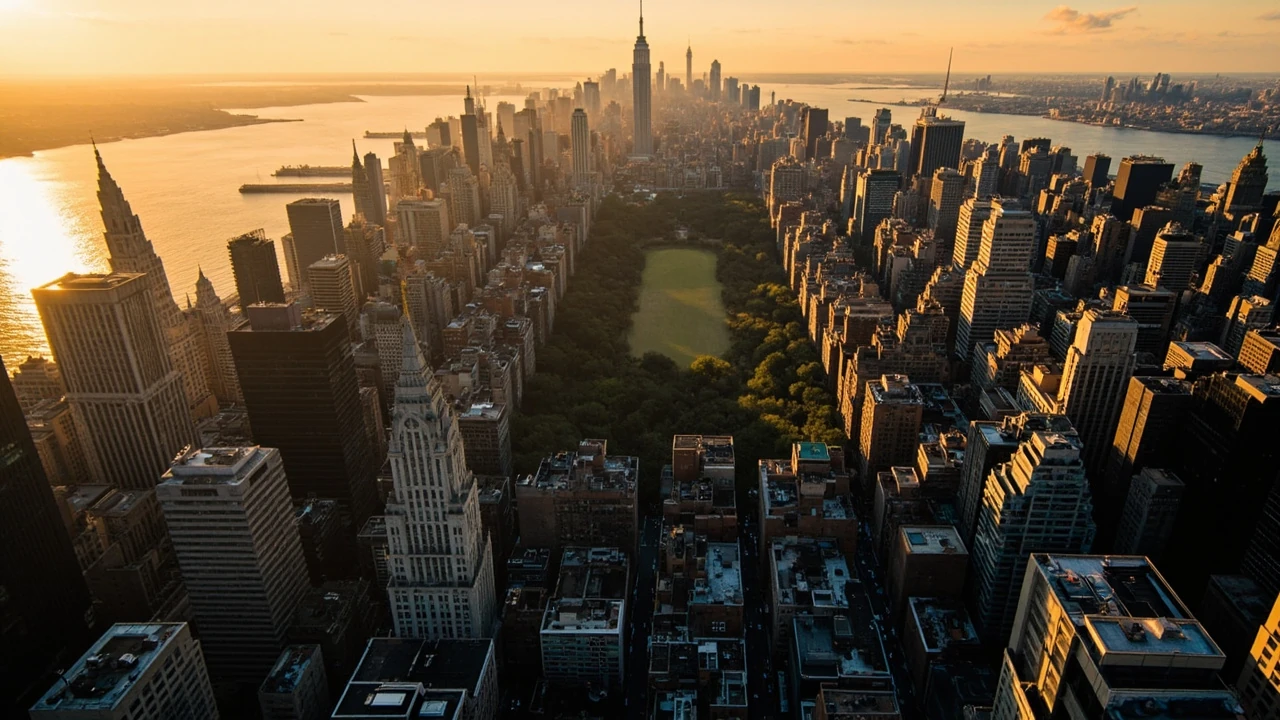
Manhattan districts: how the borough’s neighborhoods fit together
A first visit to Manhattan can feel surprisingly complicated because the borough is divided into official administrative areas, well-known neighborhood names, smaller historic districts, and loose cultural zones that residents use differently. Someone planning a day out may hear all four described as “districts,” even though only one has a precise governmental meaning. Knowing which system a person is using can prevent a simple mistake: choosing an apartment near the wrong attraction, expecting a subway ride to take too long, or spending an entire itinerary in a part of the island that does not match the trip.
For most visitors, Manhattan districts are best understood as a practical map of neighborhoods: Lower Manhattan for major historic sights, Midtown for theaters, shopping, and transportation hubs, the Upper West and Upper East Sides for museums and residential streets, and the Village, Chelsea, Greenwich Village, and SoHo for restaurants, nightlife, and independent businesses. Central Park separates many of the central neighborhoods, while the Hudson and East River frame the island’s long edges. The result is a collection of distinct local areas that remain surprisingly convenient to reach.
This guide explains the terms travelers encounter, compares the main areas, and shows how to build a route around the time, interests, and budget available. It does not treat Manhattan as one uniform tourist zone. That distinction matters because a visitor who has only one day will get a different experience in the Financial District than in Harlem, and someone staying in Midtown can reach very different parts of the city depending on which subway line and transfer they use.
What “district” means in Manhattan
New York City uses community districts for many administrative and planning purposes. These are numbered areas represented on the city’s official community district profiles. They are useful for residents, public agencies, and planners, but they do not correspond neatly to the names used in guidebooks, restaurant reviews, real estate listings, or local conversation. A neighborhood can overlap a community district, while some community districts contain several neighborhoods with different characters.
“Manhattan districts” in a travel context usually refers more loosely to the island’s recognizable neighborhoods and smaller districts. A visitor might mean the Financial District, Greenwich Village, Harlem, or the Upper East Side. Local residents might instead use terms such as the Lower East Side, Koreatown, or Little Germany, which describe cultural, commercial, or historical areas that do not have the same boundaries as official community districts.
For practical planning, use four overlapping levels:
- Neighborhood: a broad area with a shared identity, such as Chelsea, Harlem, or the Upper West Side.
- Smaller district or quarter: a more specific area such as NoHo, Little Italy, or the Financial District.
- Community district: an official numbered area used for municipal administration and planning.
- Landmark or corridor: a street, park, waterfront, or historic precinct that may cross neighborhood boundaries.
Most route planning works best at the neighborhood level. Move to community districts when researching civic services, school zones, zoning, or local government representation. Use landmark and corridor names when comparing restaurant locations, museums, hotels, or walking distances.
Comparing Manhattan’s main visitor districts
No district is universally “best.” The strongest choice depends on what a visitor wants to prioritize. Midtown offers convenient transportation and major attractions but can feel busy and business-oriented. The Lower Manhattan area provides a concentration of history and waterfront views. Neighborhoods farther north often reward slower exploration, especially when a trip includes markets, smaller museums, parks, and residential architecture.
| Area | Best for | Typical atmosphere | Planning consideration |
|---|---|---|---|
| Lower Manhattan | History, waterfront views, major sights | Monumental, business-oriented, increasingly residential | Allow time for security checks at some major attractions and separate the Financial District from the Battery and waterfront. |
| SoHo, NoHo, and Little Italy | Architecture, food, independent shopping | Touristy at peak times, lively in the evening | Districts are close together, but their crowds and restaurants change quickly from one street to the next. |
| Greenwich Village and the West Village | Streets, small shops, food, walking atmosphere | Compact, pedestrian-oriented, residential | Popular streets can be crowded; side streets are often more rewarding but quieter. |
| Chelsea and the High Line area | Contemporary culture, galleries, markets | Polished, active, visitor-friendly | The High Line is a linear attraction, while Chelsea extends beyond the immediate promenade. |
| Midtown | Theater, broad museum choices, shopping, transport | Busy, commercial, connected | Hotel density is high, and the distance between “nearby” buildings can be surprisingly long. |
| Upper West Side and Upper East Side | Museums, Central Park, classic architecture | Spacious, residential, family-friendly | Cross-town travel can take longer than a map distance suggests, especially during busy periods. |
| Harlem | History, music, local institutions, neighborhood dining | Residential, community-centered, varied | Explore beyond the most familiar avenues and give local businesses time rather than rushing between landmarks. |
The table describes broad patterns, not rigid borders. Manhattan’s neighborhoods overlap, and a short walk can produce a different experience from the one implied by a district name. For example, the commercial energy of SoHo gives way to smaller-scale residential blocks near its edges. Midtown contains quiet galleries and brownstone-lined side streets as well as busy avenues and office towers. Harlem, East Harlem, and Central Harlem contain distinct institutions and communities.
Which Manhattan district fits your trip?
Begin with the largest part of the day. If most activities are concentrated around Times Square, Bryant Park, the Empire State Building, or Grand Central Terminal, staying in Midtown minimizes hotel transfers. If the priority is museums, choose between the Upper West Side and Upper East Side rather than assuming the entire museum district is one compact walk. Museum density alone does not remove the need to account for distance, street orientation, and the time spent inside each collection.
For a first visit centered on major sights, Lower Manhattan can work well. The area contains a concentration of celebrated landmarks, while the waterfront provides room for a break between indoor attractions. It is less useful as a base for travelers who want casual neighborhood walking every evening, because much of the area changes character after offices close. Staying near a transportation hub can improve convenience, but the experience after dark may feel more businesslike than residential.
Food and neighborhood atmosphere may point toward the Village, Chelsea, the Lower East Side, or Harlem. These areas are not interchangeable. The Village is known for compact blocks, old street patterns, independent shops, and a strong connection between the street and neighborhood businesses. Chelsea combines converted industrial buildings, galleries, restaurants, markets, and the High Line. The Lower East Side has a dense mix of old and new, from historic religious and commercial buildings to contemporary nightlife. Harlem’s identity includes major cultural institutions, brownstone streets, community businesses, and important connections to African American history.
Consider the length of your stay before choosing:
- For one major attraction: Stay or begin near the relevant neighborhood to reduce transit time and make an early start easier.
- For two or three days: Use one hotel base near a central transit line, then plan day-long neighborhood clusters rather than changing hotels.
- For four days or more: Consider two bases if the trip includes both Lower Manhattan and the Upper East or West Sides, although a single well-placed hotel can work for many itineraries.
- For a local weekend: Choose the atmosphere you want after dinner. A convenient business district may be practical but disappointing if every evening takes place in a quieter residential area.
A useful rule is to choose where you want to spend at least three unplanned hours. A brief stop is different from an afternoon of walking, lunch, or people-watching. If a district merely contains the attraction you want to see but offers little beyond it, treat it as a destination rather than a base.
Getting around Manhattan districts without wasting time
Manhattan’s long, narrow shape makes the subway the backbone of most itineraries, but distance is not always intuitive. Central Park interrupts east-west travel, while the avenues run north and south and most numbered streets cross them. Two points that look close on a map may require a transfer, a long walk through a park, or a trip around the island’s ends.
Check each leg of a journey rather than assuming one continuous route exists. When looking at directions, pay attention to three things:
- Walking time: A route may require transferring stations, climbing stairs, or crossing several avenues.
- Service pattern: Not every line runs at the same hours or with the same stops. A direct-looking route may require a late-night or weekend alternative.
- Station exits: A station can serve more than one neighborhood, and its exit may place the traveler several blocks from the intended destination.
Walking remains the best way to understand the difference between adjacent areas. It also allows a traveler to notice gradual transitions that disappear on the subway. A route through Harlem may pass historic row houses, newer development, churches, restaurants, schools, and small shops without passing through a dramatic tourist zone. Similar transitions occur between Chelsea and the West Village, the Upper East Side and Harlem, and Lower Manhattan near the South Street Seaport.
| Journey type | Usually best option | Why | Watch for |
|---|---|---|---|
| Short distance, comfortable weather | Walk | Shows street details and often avoids station overhead | Heat, rain, hills, crowded crossings, and inaccurate straight-line map estimates |
| Long north-south trip | Subway along an avenue | Avoids traffic and is usually direct | Waiting time, transfer walks, and a station-to-door distance |
| Cross-town through Midtown | Train when practical | A local train can cross the island without going around Central Park | Some trains skip stops, and a mistaken exit can add several blocks |
| Upper Manhattan to Lower Manhattan | Subway, often with one transfer | Direct north-south travel avoids a long taxi ride | The total door-to-door time may still exceed the number of stops |
| Short trip with luggage | Subway or taxi | Rolling luggage is difficult on stairs and crowded sidewalks | Elevator access and vehicle traffic can affect the journey |
Current service information and temporary station changes can affect every route. Before leaving, check the transit agency’s service notices and allow extra time for disruptions. Walking directions should include the actual entrance and exit rather than relying only on a neighborhood label.
A one-day route through three contrasting districts
There are also legal and electoral meanings. The office known as the Manhattan District Attorney is the elected prosecutor for New York County; the office and history of the county prosecutor are separate from the neighborhood boundaries discussed in this guide. Recognizing that distinction is useful if a search result mixes tourism terms with city government information.
A well-designed day limits geographic scatter. One practical approach combines Lower Manhattan in the morning, Greenwich Village in the afternoon, and Midtown in the evening. It moves roughly north rather than crossing Manhattan back and forth, and each section offers a different rhythm.
Begin with a morning visit in Lower Manhattan. The Battery provides open waterfront views and a strong sense of the island’s southern tip. From there, the route can continue toward the Financial District and its mixture of skyscrapers, public spaces, and historic buildings. Early hours are useful for landmarks that require timed entry because the day has not yet become crowded.
For lunch, eat near the route rather than selecting a restaurant solely from district-level hype. That may mean choosing among the Battery and Civic Center area, the Financial District, or Chinatown, depending on the specific streets included. North of the Financial District, the historic street pattern becomes more noticeable as the route enters Two Bridges, Little Italy, and the edges of SoHo.
Continue into Greenwich Village or the West Village during the middle of the day. These areas reward walking without a rigid attraction checklist. The street plan changes from the rigid southern grid, blocks become smaller, and trees, brownstones, corner stores, and independent businesses come into view. The Village also works well for an early evening because its dining and cultural options are distributed throughout the neighborhood rather than concentrated in one enclosed complex.
Finish in Midtown. Broadway performances, a walk around the theatre district, Bryant Park, or a visit to a major observation deck can serve as the evening anchor. The transition north is simple in geographic terms, though it may still require a subway connection depending on the exact stops. Ending with a reserved performance or timed attraction also gives the day a defined ending rather than leaving the visitor to manage a late trip with tired feet.
For travelers replacing this route with a different set of interests, keep the same north-south structure. Museum travelers can substitute the Upper West or East Side for the Village. Food-focused visitors can build an afternoon around a market or culinary neighborhood. Music and history travelers can replace Lower Manhattan with Harlem or another cultural district. The principle is more useful than the exact itinerary: group nearby experiences and avoid making several cross-town journeys in one day.
Where to pause, eat, and explore beyond the headline sights
Manhattan’s most memorable areas contain more than a list of major attractions. Waterfronts, parks, neighborhood streets, markets, and independent businesses often explain the city better than a sequence of ticketed landmarks. These pauses also make a practical itinerary less exhausting.
Central Park deserves more than a quick crossing. Its reservoir path, bridges, lawns, wooded sections, and cultural facilities create distinct experiences within the same large space. The park can connect the Upper West and Upper East Sides, but it is also large enough that distance matters. Plan one destination within it rather than assuming every feature is close to every entrance.
The Hudson River parks and piers are useful alternatives for waterfront views and outdoor breaks. Their atmosphere differs by location, and some areas pair well with a walk through a neighboring district. Similar principles apply along the East River, where bridges and piers create dramatic views across the water. Weather and season can determine how long a waterfront stop feels worthwhile.
Small green spaces add variety to downtown routes. Many are neighborhood spaces rather than major destinations, but they offer a chance to slow down, observe local activity, and understand the residential fabric around them. The same is true of arcades, squares, community stages, and smaller cultural institutions.
Use these questions when choosing a pause:
- Does it offer a clear reason to stop, or is it only an empty gap between attractions?
- Can it work without a reservation, purchase, or timed entry?
- Is it comfortable for the expected weather?
- Does it provide a useful view, rest, or local context?
- Will reaching it require undoing the route already completed?
For restaurant planning, separate the neighborhood from the specific street. The quality of a dining trip depends on the cuisine, reservation rules, neighborhood, and current operating information—not simply the fame of a district. Likewise, a gallery district may be worth visiting without a major purchase, while a famous market can be enjoyable even if a traveler does not intend to buy anything.
Common mistakes when planning around Manhattan neighborhoods
The most frequent planning errors come from treating Manhattan as though every point were close to every other point. On a rectangular map, an upper-east-side address and an upper-west-side address can appear separated by a thin band of park. A cross-town route, however, may involve transferring, waiting, and a substantial walk.
Another error is selecting an accommodation in a quieter part of town while assuming every evening activity will be nearby. Midtown is convenient for major attractions, but much of the area becomes quieter after the workday ends. The Lower East Side and the Village offer more evening street life, while a visitor who values a quieter stay may prefer a residential side street near a good transit connection.
Visitors also sometimes underestimate the effect of arrival time. A crowded avenue at midday, a packed restaurant at the dinner hour, and a landmark at opening time can make the same place feel entirely different. Build in flexibility for one major attraction per district rather than scheduling four timed experiences in the same compact area.
Finally, do not confuse a familiar label with a complete neighborhood. “SoHo” may mean the historic cast-iron district, the wider area extending north into NoHo, or simply a collection of restaurants and stores around a particular intersection. “Harlem” may refer to a large part of upper Manhattan, a specific avenue corridor, or a cultural destination centered on institutions and performance spaces. Use street addresses or map boundaries when precision matters.
A quick final check can prevent most problems:
- Confirm that the route groups neighborhoods rather than zigzagging across the island.
- Check station exits, service changes, and walking directions in a current map or transit app.
- Verify attraction hours, timed-entry rules, and closure notices before the visit.
- Leave room for a meal, rest, or weather change between major stops.
- Keep one evening flexible so a delayed train does not compress the entire itinerary.
Frequently asked questions
How many districts are there in Manhattan?
It depends on the definition. Manhattan contains numbered community districts used for city administration and planning, while travel guides usually organize the borough by larger neighborhoods and smaller quarters. There are also specialized legal and electoral districts. For sightseeing and hotel selection, the neighborhood level is generally the most useful, because it reflects the places visitors actually experience. Official community district boundaries remain important when researching municipal services, but they are not the same as the neighborhood boundaries most people use in conversation.
What are the best Manhattan districts for a first visit?
For a first visit focused on major landmarks, Lower Manhattan offers a strong concentration of history, architecture, and waterfront space. Midtown is convenient for large museums, Broadway, shopping, and major observation attractions. Greenwich Village and the West Village suit travelers who value street walks, independent businesses, and neighborhood dining. The Upper East and Upper West Sides are especially useful for museum-focused itineraries and Central Park. A first trip does not need to cover all of them; two or three well-chosen districts will usually produce a more satisfying visit than a checklist of the entire borough.
Which Manhattan district is best for shopping?
SoHo is the clearest choice for distinctive architecture, independent boutiques, and designer shopping in a compact historic setting. Fifth Avenue concentrates major luxury stores and department flagships, while Madison Avenue serves luxury shoppers in a more polished commercial environment. SoHo can feel crowded and intensely commercial on peak shopping days, although nearby streets are calmer. Chelsea adds contemporary galleries and a broader mix of design, fashion, and neighborhood businesses. Shoppers should choose by the kind of experience they want rather than by district fame alone.
Which Manhattan district is best for museums?
The Upper East Side has the greatest concentration of major museums, making it efficient for visitors who want to spend substantial time inside collections. The Upper West Side also combines major institutions with Central Park and a strong neighborhood atmosphere. Midtown offers additional art choices and convenient links to major attractions, while Lower Manhattan provides a strong focus on history and includes institutions dealing with immigration, city life, and the American experience. Museum visits require more time than many itineraries allow, so choosing two institutions in the same part of the island is usually better than attempting a cross-town collection marathon.
Is Greenwich Village better than the West Village?
They are related, and many travelers use the names interchangeably, but the traditional distinction is useful. Greenwich Village is the larger, better-known area extending south toward Washington Square Park and west toward the Hudson. The West Village is generally considered the smaller area north of 14th Street and west of Greenwich Avenue, with many tree-lined streets and former workers’ housing. There is no sharp official border, and the experience changes street by street. Both reward walking, but the West Village often feels quieter and more residential. For restaurants, shopping, and nightlife, the two should be explored as one continuous district rather than as rigidly separate destinations.
Which Manhattan district is best for a family visit?
The Upper West Side and Upper East Side combine several museums with Central Park, spacious streets, and family-friendly neighborhood services. Midtown is convenient for Broadway, major attractions, and transportation but can be intensely crowded. The American Museum of Natural History and Central Park make the Upper West Side particularly practical for families. Families staying farther south can still reach these areas, though a full day of cross-town travel may be less comfortable than a shorter visit centered near a chosen institution. Age, nap schedules, stroller logistics, and interest in a specific exhibit matter more than a universal neighborhood ranking.
Is Harlem close to the Upper West Side?
It is geographically adjacent to portions of the Upper West Side, but a journey between the two can still take meaningful time because of the street layout, station locations, Central Park crossings, and the volume of traffic on cross-town avenues. Visitors should not assume that an activity at one edge of Central Park can be followed immediately by another on the opposite side without checking a current route. Walking can work in some parts of the park, but distances are larger than they may look on a small map. Build travel time into the schedule rather than treating nearby neighborhoods as interchangeable stops.
What is the most central Manhattan district for a hotel?
Midtown is often the most convenient base because it connects with major subway lines and sits close to Grand Central Terminal, Bryant Park, Broadway theaters, and several large attractions. It is not automatically the best choice for atmosphere, quiet, or dining. NoHo and parts of the Village offer lively street life, while the Upper West Side is calmer and convenient for museum travelers. The best location depends on the trip’s priorities and on the hotel’s exact block. A station name or famous intersection may place a property farther from the train than the neighborhood label suggests, so examine the walking directions to the entrance.
Do I need to reserve attractions in Manhattan districts?
It depends on the attraction and the season. Some major museums and popular observation decks use timed entry, while other museums may admit visitors without a specific time slot. Restaurants, Broadway shows, guided tours, and special exhibitions may have separate reservation requirements. Rules and operating schedules can change, so check the official attraction website shortly before visiting. A reservation does not guarantee a shorter overall day: travel to the timed entry, security screening, and the length of the visit can affect how much of the neighborhood remains visible afterward.
What should I do if it rains while visiting Manhattan?
Use the weather to rearrange the route rather than force every neighborhood into one day. Museums and major cultural institutions can absorb a rainy morning, while a covered market, department store, bookshop, or longer restaurant meal can fill an afternoon. If the rain is light, a short waterfront or park walk can still be worthwhile, but bring a reliable waterproof layer and shoes that handle wet pavement. Avoid making a distant neighborhood dependent on a single outdoor attraction. Flexible indoor stops and a shorter route often produce a better day than trying to preserve a rigid schedule.
How many Manhattan districts should I visit in one day?
Two adjacent districts are comfortable for many travelers; three compact areas can work when the route follows the island’s length. Trying to cover distant neighborhoods requires repeated cross-town travel and usually creates a day defined more by transit than by the places visited. Choose one main district, one secondary area, and an optional evening stop nearby. Increase the number only if the traveler is comfortable with early starts, substantial walking, and a flexible pace. The most useful Manhattan districts for a day are often the ones that can be combined without repeated backtracking.



Leave a Reply