

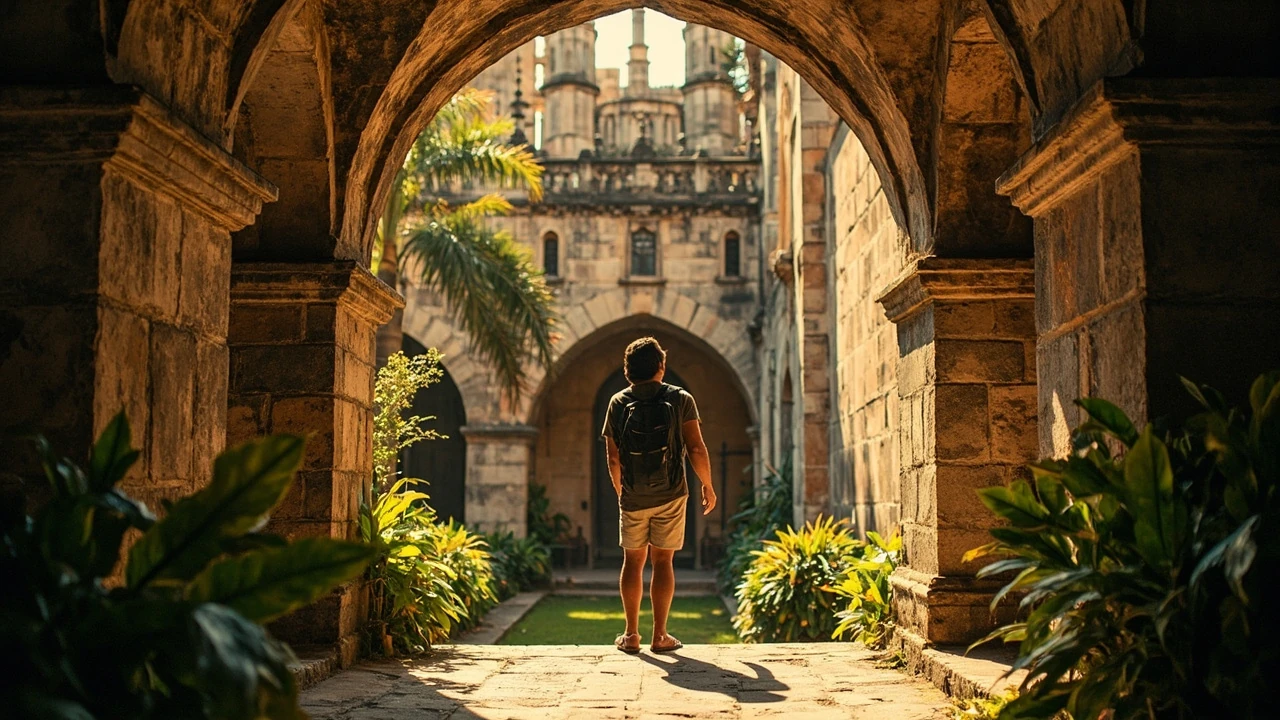
Philippines landmarks: choose the route before choosing the stops
A first visit to the Philippines can become a blur of names on a map: Intramuros, El Nido, Boracay, Coron, Paoay, Miagao, and the Chocolate Hills all promise memorable sights. The mistake is treating them as interchangeable destinations. They belong to different island groups, have distinct travel times, and suit different travelers. A careful plan starts by deciding which region deserves most of your trip, then matching a small number of major sites to the time available.
This guide focuses on the most useful Philippines landmarks for first-time visitors and anyone who wants a more coherent itinerary. It explains how to balance history, scenery, beaches, and culture without rushing between opposite ends of the archipelago. It also separates formal historic markers from the attractions that simply give a destination its identity, because those are not always the same thing.
Start with four kinds of landmarks, not a ranked list of famous places
Most Philippines landmarks fall into four broad travel styles: Spanish-era religious and civic sites, natural formations, colonial-era fortifications, and modern cultural attractions. A history-centered traveler may get more from Intramuros, Paoay, and Miagao than from a week centered on island beaches. A first-time visitor who wants scenery and open-air experiences may prefer the Chocolate Hills, El Nido, Coron, or the landscapes around Banaue.
That distinction matters because the country’s major attractions are spread across a large archipelago. Luzon contains Manila, Intramuros, the Cordillera region, and many heritage towns in Ilocos. The Visayas includes Boracay, Cebu, Bohol, Negros, Siquijor, and the northern reach of Palawan. Mindanao offers distinctive cities, mountain landscapes, diving areas, and cultural sites that often require more careful transport planning.
| Landmark type | Strong places to consider | Best for | Planning consideration |
|---|---|---|---|
| Historic city and religious sites | Intramuros, San Agustin Church, Fort Santiago, Paoay Church, Miagao Church | Architecture, colonial history, photography | Allow time for heat, walking, and sites that operate on separate schedules |
| Natural formations | Chocolate Hills, El Nido, Coron, Banaue rice terraces | Scenery, outdoor activities, photography | Weather and transport can affect visibility and access |
| Fortifications and wartime history | Intramuros, Fort Santiago, Corregidor | Military history and quieter historical settings | Do not assume every attraction is inside the walled city |
| Modern cultural attractions | National Museum of Fine Arts, Cultural Center of the Philippines, regional museums | Art, design, national history, shorter city visits | Check current exhibition and access details before traveling across Manila |
Rather than trying to see every major attraction, build a route around two or three complementary experiences. For a ten-day trip, a sensible combination might be Manila history, an Ilocos heritage loop, and a short stay on Boracay. For two weeks, you can add more of the Visayas. A month creates room for a substantial regional journey, but even then, repeated flights and long road transfers can consume more time than expected.
Choose Manila, heritage regions, or island scenery
Manila is the easiest starting point for an international arrival and offers the broadest range of major Philippines landmarks in one metropolitan area. Intramuros contains a dense concentration of churches, fortifications, plazas, and government buildings. The surrounding capital also provides museums and cultural institutions for travelers who want context beyond the old city.
The National Museum complex in Manila is useful because it can help visitors understand the country’s artistic, archaeological, and historical collections before visiting sites in the provinces. The Cultural Center of the Philippines provides another perspective through performances and exhibitions, although a theater visit should be planned around its current program rather than treated as a guaranteed attraction.
Outside the capital, Ilocos offers a strong history-and-landscape combination. Paoay’s massive church, the old town of Vigan, and the stone churches around Miagao are meaningful stops for travelers interested in Spanish colonial architecture and regional trade history. The route works well for drivers, but public transportation takes more time and requires local connections.
The Cordillera region is a different proposition. The Banaue rice terraces are the signature sight, but the landscape is a network of mountain communities rather than a single viewpoint. Communities such as Batad and Hungduan can require steep roads and careful transport arrangements. Travelers who value dramatic scenery may prefer this region over a crowded beach itinerary.
Farther south, Cebu provides a convenient base for urban sightseeing and day trips. Mactan and the Cebu City waterfront are easy to reach, while the wider island supports visits to rural scenery and religious sites. Bohol adds the Chocolate Hills, Hinagdanan Cave, and river landscapes. Boracay offers a different experience centered on the long White Beach corridor, while quieter parts of the island can suit travelers looking for a slower stay.
In northern Palawan, El Nido is known for lagoon scenery, limestone cliffs, island-hopping routes, and viewpoints around town. Coron has a similar appeal but generally emphasizes wreck diving, reef areas, and a wider spread of small islands. Neither should be treated as a simple beach resort: boats, weather, park rules, and island closures can shape the day.
Regional identity matters when building an itinerary. The Colombia Culture Makes More Sense When You Stop Looking for One Version of It offers a useful parallel for travelers: a country becomes clearer when its regions are allowed to remain distinct rather than being reduced to one stereotype. The same principle applies when choosing among the Philippines landmarks that appeal to the most travelers.
Use the official historic register as one source, not the whole map
“Landmark” can mean a nationally recognized historic property, but it can also mean a place that travelers naturally recognize as a defining sight. The For additional context, registry of Philippine historic landmarks is useful for understanding officially declared historic sites. The supplied source described roughly 120 entries as of August 2018, a historical figure rather than a current count. It also listed sites spanning Manila, Cebu, Iloilo, Ilocos, Batangas, Bohol, Negros Occidental, and other provinces.
The register includes places such as the Church of San Agustin, Miagao Church, Old Iloilo City Hall, the Leyte Provincial Capitol, Fort Santiago, Barasoain Church, and Malacañang Palace. Its value is historical: it shows that important places are distributed far beyond the tourist centers. Its limitation is equally important. A listing does not automatically tell you whether a site is open, easy to reach, or suitable for a short stop.
Official heritage authorities also publish information on registered cultural properties. The For additional context, National Commission for Culture and the Arts overview of registered cultural properties provides a more formal reference point when checking the status and context of a protected place. This is separate from the practical information needed to plan a visit.
Before committing to a landmark, verify several separate details:
- Current access: Confirm that the site or museum is open to visitors and that the relevant entrance is usable.
- Operating arrangements: Check opening days, guided-tour schedules, closures, and reservation requirements on an official source.
- Transport: Determine whether reaching the site requires a tour, a hired vehicle, a boat, or a combination of transfers.
- Time required: Include walking, queues, photography stops, and nearby meals rather than using only the posted visit duration.
- Protection rules: Look for restrictions on touching, climbing, photography, dress, or entering structurally sensitive areas.
Do this check for every major stop, especially if the trip involves islands or remote heritage sites. A saved post from a previous year is not an adequate substitute for current local or official information.
Build the first five days around a clear geographic sequence
A practical Manila itinerary should not attempt to cover the capital’s monuments at random. Begin with Intramuros and choose a small number of landmarks within a manageable area. The San Agustin Church and Fort Santiago are central to many routes. The Manila Cathedral, the Bishops Palace, and other heritage buildings can be added, but the walled district becomes more rewarding when you spend time rather than simply collecting addresses.
A workable five-day plan might look like this:
- Arrival day: Settle in Manila, eat locally, and begin with a light walk rather than a demanding cross-city itinerary.
- Intramuros day: Visit the San Agustin Church, Fort Santiago, and selected civic or religious sites, with a break for food and heat.
- Museum and city day: Choose one or two museum or cultural institutions, then explore a neighborhood beyond the most photographed streets.
- Ilocos heritage route: Travel to Vigan, Paoay, and Miagao with a driver or carefully arranged transport connections.
- Return or onward journey: Return to Manila for an onward flight, or continue by air or road depending on the next island group.
This structure gives Manila enough time to reveal layers of history without making every day exhausting. It also leaves room for a weather delay, a missed connection, or a museum that deserves more time than expected.
If Boracay is the next stop, place it after the Manila and Ilocos portion rather than adding it to a difficult same-day transfer. If the traveler’s main goal is island scenery, skip the Ilocos route and move directly from Manila to a carefully chosen Visayas or Palawan base. The strongest itinerary is not always the one with the most places; it is the one whose transitions remain realistic.
Give beaches, mountains, and cities their own rhythm
Visitors sometimes schedule a heritage site, a mountain viewpoint, and a major island-hopping excursion on the same day. The resulting plan may contain three memorable moments but little time to experience any of them. Philippines landmarks often need context, and moving between them can consume more energy than expected.
Natural landmarks demand a different approach from historic buildings. In El Nido and Coron, the day depends on boats, sea conditions, route arrangements, and time spent moving between islands. In Bohol, the Chocolate Hills can be visited as part of a broader countryside route rather than as a single quick stop. The Banaue terraces are best approached as a highland destination, not an instant side trip from Manila.
Use this simple structure to prevent fatigue:
- Schedule one demanding outdoor experience on most days.
- Leave a slower block in the middle of a multi-day stay.
- Avoid changing hotels every other night unless the trip is specifically about regional comparison.
- Group nearby urban sights on one day and distant sites on separate days.
- Keep at least one flexible block for weather, transport changes, and a return to a favorite place.
Travelers accustomed to seeing similar images and reviews in a single sightseeing destination may also need to recalibrate. The guide to Amalfi Coast Italy: What the Photos Don’t Tell You illustrates how crowds, roads, and short distances between celebrated stops can alter the experience. The lesson transfers well: a celebrated landmark may be visually impressive while still requiring patience beyond the viewpoint.
Plan for heat, rain, tides, and transport rather than a perfect forecast
The Philippines has a tropical climate, but conditions vary by season and region. Heat and humidity can make long walks uncomfortable, while heavy rain may affect roads, trails, boats, and visibility. A forecast is useful for the week ahead, but it should not be the only basis for the itinerary.
Carry or plan for lightweight rain protection, refillable water, sun protection, and shoes that handle wet surfaces. In heritage districts, breathable clothing and scheduled midday breaks can make a large difference. At sea, follow local operator instructions and avoid assuming that an island excursion will run exactly as planned.
| Travel condition | Where it matters most | Practical response |
|---|---|---|
| Heat and strong sun | Intramuros, city walking, open viewpoints | Walk early, take indoor breaks, carry water, and avoid overpacking the midday schedule |
| Heavy rain | Highland roads, agricultural areas, boat transfers | Keep a flexible day and verify whether road or marine conditions affect the activity |
| Typhoon-season disruption | Coastal and island travel | Track official local notices and avoid a nonrefundable connection immediately after a weather-sensitive excursion |
| Tides and sea conditions | Beach and island itineraries | Ask the operator about timing and alternatives instead of relying on a fixed online schedule |
| Traffic and long transfers | Metro Manila, provincial highways, airport routes | Allow a generous buffer and avoid booking a distant activity right after an international arrival |
Safety planning is equally practical. Use licensed transport where appropriate, keep valuables out of sight in crowded areas, and follow posted rules at monuments, churches, beaches, and natural formations. Do not climb barriers for a photograph or enter closed areas. Local guides can explain restrictions that are not obvious from a map or travel article.
Travel insurance and emergency contacts are sensible for longer journeys. Keep copies of key documents, confirm the insurer’s coverage for the activities included, and learn the current emergency number for each area. These preparations do not eliminate risk, but they make unexpected changes easier to manage.
Make room for culture without turning visits into performances
Many of the country’s most memorable Philippines landmarks are still active religious spaces rather than neutral tourist exhibits. Churches may welcome visitors outside a service, but rules can change. Quiet behavior, modest dress, and restrictions on photography or access should be treated as signs of respect, not inconveniences to negotiate away.
Food is another form of cultural encounter. Regional specialties reflect the ingredients and history of different islands, but the strongest choice is not the dish with the longest online list. Look for places where food is prepared in the local style, check whether the menu and prices are clear, and consider dietary needs before ordering. A market visit can also reveal more about local ingredients and daily life than a stop planned only for a photograph.
Choose at least one slower cultural experience for every three major sightseeing days. It might be a museum, a guided neighborhood walk, a market visit, a performance, or a meal with enough time to understand what is being served. This pacing also helps prevent the trip from becoming a checklist of locations with little connection between them.
Respectful travel also applies when photographing people, homes, ceremonies, and working spaces. Ask before taking close portraits, and avoid treating poverty, crowded streets, or traditional dress as spectacle. The goal is to encounter living communities rather than collect images that remove the people from their context.
Use a simple scoring method for the stops you cannot afford to miss
When time is limited, shortlisting can become emotional. A memorable video, a famous photograph, or an influencer’s recommendation may make one place feel more urgent than another. Score each candidate on the same practical criteria instead.
Give each possible stop a score from one to five for:
- Fit: Does it match the traveler’s main interests?
- Access: Can the traveler reach it without an excessive number of transfers?
- Time: Can the stop coexist with nearby activities?
- Season: Does weather or current conditions support the visit?
- Meaning: Will the site provide an experience that is difficult to find elsewhere?
Apply the scoring method to three levels of Philippines landmarks: one must-see heritage site, one signature natural experience, and one cultural stop. This produces balance without insisting that every trip needs the same famous attractions. A traveler who values architecture might combine Intramuros with Miagao and a museum in Manila. A traveler focused on scenery might pair the Chocolate Hills with El Nido and a quieter beach.
After choosing the core stops, remove the day that feels least distinct. A second beach day may be worthwhile if relaxation is the purpose, but it is less valuable than a second landmark if the stated goal is discovery. Conversely, do not “optimize” away an unplanned afternoon in a market or neighborhood simply because no major monument appears on the schedule.
Frequently asked questions
What are the best Philippines landmarks for a first trip?
For a short first visit, Manila and Intramuros provide the easiest concentration of history and culture. Add one regional experience, such as an Ilocos heritage loop or a Visayas island stay, rather than attempting several distant regions. The best choice depends on how much time you have and whether culture, scenery, or relaxation is the main priority.
Should every Philippines landmark be visited on a guided tour?
No. Some large cities and well-connected sites work well independently, while remote sites, small churches, mountain roads, and boat destinations benefit from local guidance. Use a guide where access is complex, interpretation matters, or current rules are difficult to understand. Avoid booking an expensive tour simply because it lists more stops.
How many days should I allow for Intramuros?
One full day is enough for several major sites when you value walking and photography. Add another day if you want museum visits, a slower pace, or repeat access to specific locations. Heat, traffic, and the number of churches included can make a rushed half day feel less rewarding than a measured full day.
Are the Chocolate Hills, Boracay, and El Nido better as separate destinations?
They serve different travel purposes, so separating them usually creates a more varied trip. The Chocolate Hills offer a countryside excursion, Boracay is primarily a beach destination, and El Nido centers on dramatic island scenery and boat-based exploration. Travelers with more time can compare them; others should select one based on the desired pace.
What is the best season for visiting Philippines landmarks?
Conditions vary across the archipelago, and the best period depends on the region and planned activities. For island travel, monitor local weather and marine advisories. For heritage towns, allow flexibility for heavy rain. Rather than relying on a single national season label, check conditions for the specific months and places being visited.
Can I visit historic churches without attending a religious service?
Many churches welcome sightseers at designated times, but operating arrangements and security rules can vary. Check the current information for each church, arrive outside service periods when required, dress appropriately, and keep voices low. Religious buildings are active places of worship, not simply photo backdrops.
How should I choose between a private driver and public transportation?
A private driver is often more efficient for a multi-stop heritage route with fixed locations and long transfers. Public transportation can suit travelers who value local experience, have flexible time, and can tolerate connections. Compare the total door-to-door journey time rather than looking only at the ticket price.
Are the famous Philippines landmarks usually crowded?
Popular churches, waterfronts, and natural viewpoints can become crowded, especially during holidays and peak travel periods. Early starts help, but respectful pacing matters more than defeating every queue. Leave room for an alternative viewpoint or a nearby cultural stop so a congested landmark does not define the entire day.
What should I verify before leaving for the Philippines?
Check passport and entry requirements through official government channels, then confirm current access, opening arrangements, transport, and weather for every major site. Review the itinerary for costly back-to-back flights, allow a buffer after arrival, and carry copies of important documents. Confirmations should be checked again close to departure because schedules and access rules can change.

Leave a Reply